

Ignition Seed Company
Kashmiri Seeds
Kashmiri Seeds
Couldn't load pickup availability
General
General
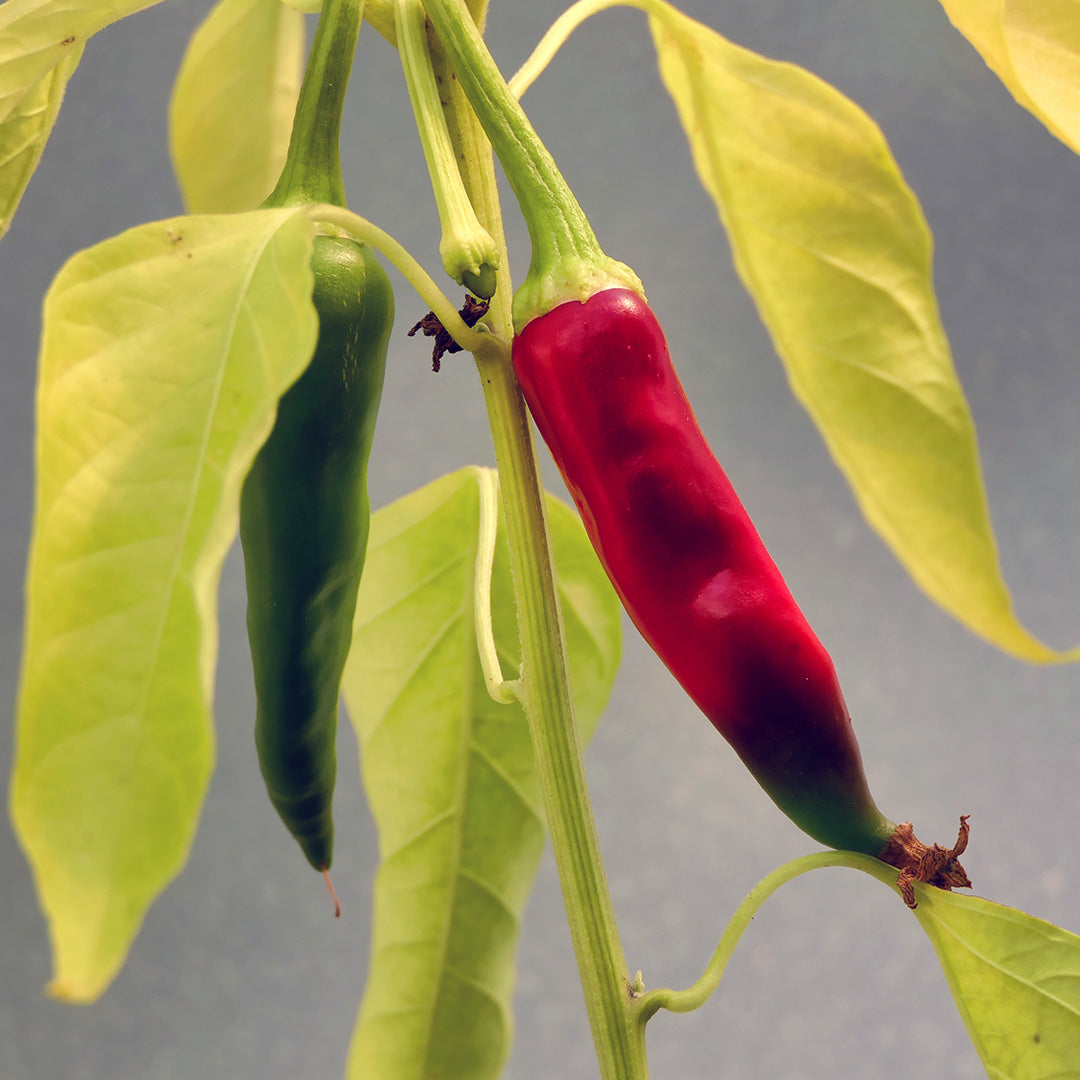
Kashmiri is grown as much for its colour as its warmth. The deep red it gives a dish is the whole point, and the heat is gentle enough that you can use it by the spoonful rather than the pinch.
For anyone who cooks Indian food at home, it is one of the genuinely practical chillies to grow. Dry the ripe pods, grind them, and you have the powder that gives rogan josh and tandoori their colour without turning the meal into an endurance test.
It is an annuum, so it is quicker and more forgiving than the superhots, and a good choice for a grower who wants something useful in the kitchen rather than a trophy on the plant.
Cultivation
Cultivation
Annuum varieties are the more forgiving end of the chilli world, quicker to germinate and quicker to crop, which makes this a good one to get right without much fuss.
Start seeds indoors from July through September. Sow two seeds per cell, around 3 to 4 mm deep, in fresh seed-raising mix, and keep it evenly moist rather than wet. Aim for a steady 25 to 30 degrees in the mix. A heat pad speeds things along and makes germination more even, though annuum seed will usually come away without one given a warm spot.
Expect germination in roughly one to three weeks, noticeably faster than the chinense varieties. Once seedlings have a couple of true leaves, pot them on and keep them warm and bright.
Move plants into a greenhouse around October, once nights are reliably mild. Hold outdoor planting until November, after the soil has warmed and the risk of a cold setback has passed. Harden them off gradually over a week, then give them full sun, shelter from wind and free-draining mix. A 15 to 20 litre pot suits most annuum varieties well.
Growing
Growing
Water consistently through the warm months, keeping the mix moist but never waterlogged, and let pots drain freely rather than leaving roots wet. Pots dry quickly in an Auckland summer, so check them daily once the plant is carrying fruit. Erratic watering stresses the plant and brings on blossom end rot.
Pinch out the main growing tip early to encourage branching. More branches means more flowering sites and more pods.
Feed with a tomato fertiliser once flowering starts, following the label rate. Chillies and tomatoes want much the same thing, so there is no need to overcomplicate it.
Stake the plant before a heavy crop starts pulling branches down. Keep airflow around it and clear fallen leaves and fruit, which matters most in humid weather. Pick ripe pods regularly to keep the plant producing, or leave selected fruit on to colour fully when you are drying. Most plants start yielding from January and keep going while the warm weather lasts into March or April.
Harvesting
Harvesting
Harvest fruit once it has reached its ripe colour and feels firm, coming away with a gentle tug. Use snips rather than pulling, since the branches are brittle and tear easily on a plant carrying a good crop.
The plant will keep flowering and setting fruit until the cold stops it, so expect a staggered harvest through late summer and autumn. Anything still on the plant when the season ends is perfectly usable.
Fresh pods keep a week or two in the fridge. They freeze well whole and can be grated straight from frozen, which is the easiest way to dose a hot variety accurately. They also dry well for flakes and powder, as long as you dry them until properly brittle and store them in an airtight jar away from light. Label anything dried clearly.
Heat Levels
Heat Levels
Kashmiri sits at roughly 1,000 to 2,000 SHUs, which is mild by any measure and gentler than a jalapeño. The value here is colour and a clean, mild chilli character, not a hard burn.
That makes it unusually useful. Most chillies force you to choose between flavour and how much you can actually put in. Kashmiri lets you use a generous amount for colour and a rounded warmth without the dish running away from you.
Heat still varies with the season and the plant, so taste as you go, but this is a variety the whole household can usually eat.
Pests and Diseases
Pests and Diseases
The standard chilli watch-list, none of which should put you off.
Aphids find the soft new growth first, usually in spring. Squash small numbers or blast them off with the hose, and let ladybirds and lacewings handle the rest. Whitefly thrives in a warm greenhouse, so yellow sticky traps and good airflow keep the numbers down.
Red spider mites are the one to watch in a hot, dry tunnel house over summer. Look for fine speckling on the leaves and webbing underneath. They like dry air, so occasional misting and decent ventilation go a long way. Slugs and snails will take out young transplants overnight, so protect new plantings until they have toughened up.
At the seedling stage, damping off is the main threat. Fresh seed-raising mix, no overwatering and a little air movement prevent most of it.
On the disease front, most trouble is water-related. Overwatering invites root rot, and irregular watering brings on blossom end rot, those dark sunken patches on the pod tips. Consistent moisture and free-draining mix prevent both. In still, humid conditions botrytis can appear on crowded plants, which is one more reason to prune to an open shape and give plants room.
Dishes
Dishes
Dry the ripe red pods and grind them for powder. That powder is the point: it gives curries, marinades and tandoori mixes their deep red finish with only gentle heat behind it.
Whole dried pods work well in a tempering of hot oil at the start of a dish, and they rehydrate nicely for pastes and marinades.
Fresh, they are mild enough to use generously in chutneys and salads. If a recipe calls for Kashmiri chilli powder and you have grown your own, the colour will be better than anything off a supermarket shelf.
| Heat Level: | 1,000 – 2,000 SHUs |
| Type: | Mild |
| Species: | Capsicum annuum |
| Origin: | Kashmir, India |
| Days to Harvest: | 90 days |
| Seeds per Pack: | 10+ pepper seeds |
Share