

Ignition Seed Company
Black Dracula Shishito Seeds
Black Dracula Shishito Seeds
Couldn't load pickup availability
General
General
Midnight pods, smoky bite — the shishito that steals the platter
Black Dracula Shishito is a dark-fruited selection of shishito (a normally mild Japanese/East Asian pepper, Capsicum annuum) that’s grown for its fast, snackable harvest and dramatic colour.  Unlike standard green shishitos, this type is commonly described as maturing through a black stage before finishing red when fully ripe — a look that’s typically associated with anthocyanin pigmentation in peppers, which can be more intense in high light. 
Flavour-wise, you’re in classic shishito territory: mild, slightly sweet, and gently smoky when blistered, with that famous element of chance — “most are mild, but the occasional one bites back”.  That mix is exactly why shishitos are such a crowd-pleaser: you can eat them whole, cook them fast, and serve them hot with salt and something acidic (lemon, vinegar, yuzu-style dressing).
Why it’s worth growing in NZ:
• Quick, high-use harvest: pick regularly and it keeps producing through summer into autumn. 
• Premium visual appeal: black pods and dark tones look unreal on the plant and on a serving plate. 
• Versatile kitchen pepper: blistering, tempura, pickling, skewers, stir-fries — it all works. 
If you want a pepper that looks dramatic but stays easy to cook and easy to share, Black Dracula Shishito is a standout.
Cultivation
Cultivation
Shishitos are generally approachable from seed, but NZ success comes from controlling the two things late winter won’t give you for free: warmth and light.
NZ sowing window (indoors)
• Late August–September for most of NZ
• July–August if you have a heat mat/propagator and strong grow light
• September–early October for cooler southern regions (or if indoor space is tight)
Germination temperature range
For peppers (Capsicum annuum), a warm, steady germination environment is consistently recommended; many growers aim for roughly the mid-20s to around 30°C for best speed and uniformity.  (Individual seed listings vary, but the practical takeaway is: stable warmth beats a cold windowsill every time.)
Typical germination time
Expect about 7–14 days in consistent warmth, with longer times if nights are cool or the medium stays too wet.
Seed-starting steps (repeatable and reliable)
• Use a fine seed-raising mix, lightly firmed (avoid heavy potting mix early).
• Sow 5–8 mm deep and water gently to settle.
• Keep moisture even (damp, not soggy). A clear lid helps humidity, but vent daily.
• Provide bottom warmth (heat mat) and keep trays away from cold night air.
• As soon as seedlings emerge, move them to bright light to avoid legginess.
Troubleshooting
• No/slow germination: almost always temperature swings or waterlogging. Warm it up and let the surface dry slightly between waterings.
• Leggy seedlings: not enough light; increase brightness and bring lights closer.
• Seedlings collapsing (damping off): too wet + stale air. Vent more, thin seedlings, and water from below.
Give seedlings a strong start, and Black Dracula Shishito will reward you with earlier flowering and a longer NZ harvest window.
Growing
Growing
Black Dracula Shishito grows much like other shishitos: it’s happiest with sun, shelter, and steady moisture, and it tends to reward regular picking.
Sun, shelter, airflow
• Aim for 6–8+ hours of sun.
• Prioritise wind protection (fence, hedge, courtyard, tunnelhouse). Wind-chill slows growth and can reduce fruit set.
• Keep airflow so leaves dry quickly after rain or watering — especially in humid spots.
Soil guidance (including pH)
Peppers generally perform best in well-drained soil with a pH commonly recommended around 6.0–6.8.  Work compost into the bed for structure and fertility, and avoid waterlogged sites (cold, wet roots are a fast track to problems).
Pot vs ground
• Pots: a strong NZ baseline is 15–25 L. Bigger pots buffer watering stress in midsummer and keep plants stable in wind.
• In-ground: choose your warmest, most sheltered bed; raised beds are a big advantage in wetter regions.
Feeding, watering, staking/pruning
• Water deeply, then allow the top couple of centimetres to dry slightly before watering again.
• Feed lightly while plants establish; once flowering begins, shift to a balanced feed that supports fruiting.
• Shishitos don’t always need heavy staking, but in windy NZ gardens a small stake or cage helps prevent snap-damage when plants are loaded.
• Light pruning to open the centre improves airflow and makes pest checks easier.
NZ-specific considerations
• Harden off gradually.
• Transplant in spring after frost risk (often October–November, depending on your microclimate).
• For the darkest “black” stage, strong light often intensifies dark pigmentation in peppers; sheltered full sun helps. 
Grow it warm and sheltered, harvest often, and it’s one of the easiest “special-looking” peppers you can produce.
Harvesting
Harvesting
One of the best things about shishitos is how forgiving harvest timing is: you can pick early and often, or let a portion ripen for colour and sweetness.
Ripeness cues
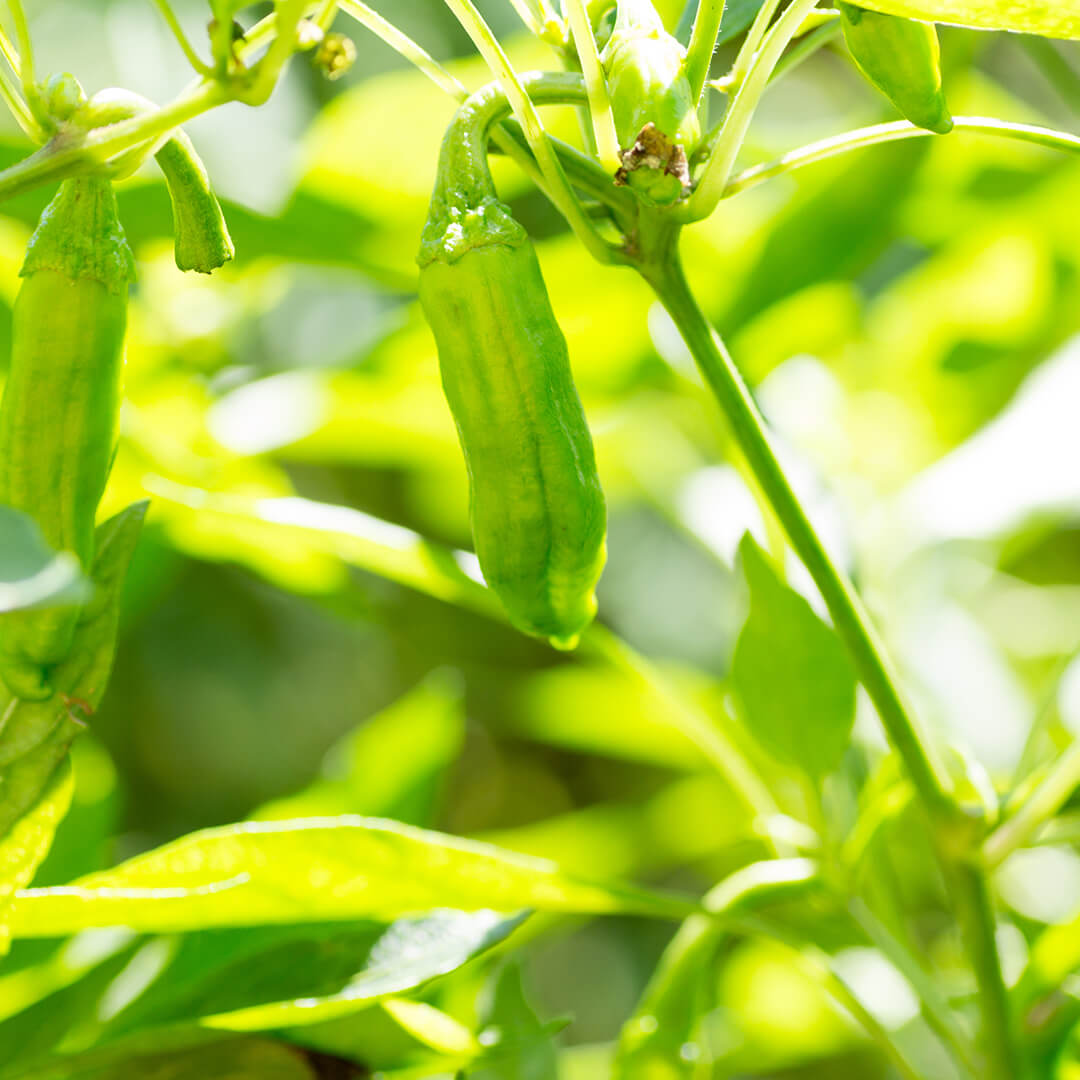
• Green stage: classic shishito harvest — firm, glossy, usually around finger length. 
• Black stage (this variety): many “black shishito” lines mature through a glossy black phase (sometimes with red striping/splotching as they transition). 
• Red stage: fully ripe shishitos are typically sweeter and richer than green. 
How to pick
• Use snips/secateurs and cut with a short stem. This avoids branch tearing and keeps plants producing.
• Harvest in the cool of morning for best storage life.
How to maximise yield
• Pick regularly. Frequent harvesting encourages continued flowering and fruiting. 
• Keep watering consistent during flowering and fruit set; big swings can reduce quality and slow production.
• Maintain plant health: a bit of feeding, good airflow, and fast pest response will extend production into autumn.
Post-harvest handling
• Fresh storage: keep pods dry and unwashed in the fridge; use within 1–2 weeks.
• Blister and serve: shishitos are famously suited to quick high-heat blistering.
• Pickling: thin walls and size make them ideal for vinegar pickles. 
• Freezing: best after cooking (blister/roast first), then freeze in portions.
Timing note
A common catalogue guide for Black Dracula Shishito is around 75+ days to harvest, though “days” depends on whether it’s counted from transplant and how warm your season is.  In NZ, use size, firmness, and colour stage as your real rules rather than chasing a single number.
Heat Levels
Heat Levels
This is a mild pepper — with a twist.
Scoville range (consistently supported for shishitos)
Multiple reputable sources place shishitos at about 50–200 SHU most of the time. 
The “surprise” factor
Shishitos are famous for the occasional hotter fruit — often framed as “one in ten” being noticeably spicier.  Some grow guides suggest rare spikes can be higher than the usual range, but the dependable message is: expect mild, but don’t be shocked by the occasional kick. 
Why heat varies
• Environmental stress (heat, dry spells, and other growing conditions) is frequently cited as a factor influencing pungency in shishitos. 
• Harvest timing and plant maturity can also shift flavour and perceived heat.
Flavour beyond “hot”
Think grassy-sweet when green, with a smoky note when blistered, and a sweeter, richer flavour if allowed to ripen red.  The black stage is primarily a colour trait; the core eating experience remains “snackable”.
Who it’s for
• Beginner: ideal — mild and forgiving.
• Families/entertaining: perfect platter pepper, with just enough risk to be fun.
• Chefs and small growers: high visual impact, quick cook time, great for menus and markets.
Pests and Diseases
Pests and Diseases
In NZ gardens and tunnelhouses, peppers face a familiar list of issues. Most problems are avoidable with airflow, drainage, and regular checks.
Common issues in NZ
• Aphids: curled tips, sticky honeydew.
• Whitefly: tiny insects that lift when disturbed; gradual weakening.
• Spider mites: speckling and dull leaves; webbing in bad infestations (often under cover).
• Fungal problems: encouraged by wet foliage, crowding, and stale air.
• Root rot: usually drainage + overwatering, especially during cool spells.
Prevention first
• Give plants space and airflow; don’t crowd them.
• Water the soil, not the leaves.
• Ensure pots and beds drain well (raised beds help in wetter regions).
• Inspect weekly: undersides of leaves and new growth tips are where pests start.
Organic controls
• Insecticidal soap for aphids/whitefly/mites (repeat applications are often needed).
• Neem-based products can help with sucking pests; follow label directions and avoid spraying in strong sun.
• Yellow sticky traps help monitor and reduce flying adults (especially whitefly).
• Prune out heavily infested tips and dispose of them.
Early warning signs
• Sticky leaves + twisted new growth = aphids/whitefly
• Fine speckling and dull leaves = mites
• Wilting with wet soil = drainage/root issue (act quickly)
Because Black Dracula Shishito is prized for its looks, keep foliage healthy and fruit clean by staying ahead of pests early rather than fighting them late.
Dishes
Dishes
Shishitos are loved because they’re quick, social, and endlessly adaptable. Black Dracula simply adds a premium visual twist.
8 dish ideas (everyday + adventurous)
• Classic blistered shishitos: pan-blister in a little oil, finish with flaky salt and lemon.
• Tempura: a traditional use for shishitos; light batter, quick fry. 
• Soy–sesame glaze: blister, then toss with soy, sesame oil, garlic, and toasted sesame seeds.
• Pickled shishitos: rice vinegar-style or standard vinegar brine — brilliant with the black-to-red colour journey. 
• Stir-fries: add late so they stay snappy.
• Ramen topping: blistered shishito with miso broth and spring onion.
• NZ-friendly BBQ: grill whole shishitos quickly and serve alongside chicken or lamb with a yoghurt-lemon sauce.
• Fish-friendly idea: blistered shishitos with a citrus dressing next to grilled fish.
Handling tips
No superhot precautions are needed, but:
• If you’re cooking a big batch indoors, blistering can create peppery fumes — use good ventilation.
• Taste a pepper early in the season; if you hit a “spicy one”, adjust how you serve the next plate.
If you want a pepper that turns a simple snack into something restaurant-worthy in under five minutes, this is it.
| Heat Level: | 50 – 200 SHUs |
| Type: | Mild |
| Species: |
Capsicum Annuum |
| Origin: | Japan |
| Days to Harvest: | 75+ days |
| Seeds per Pack: | 10+ pepper seeds |
Share