


Ignition Seed Company
Poblano Seeds
Poblano Seeds
Couldn't load pickup availability
General
General
If you cook Mexican food, the Poblano is a genuine essential, and one of the most useful mild chillies you can grow. It's a large, heart-shaped, meaty pepper with a rich, earthy flavour and a gentle heat, the pepper behind chiles rellenos, and, when dried, the ancho that anchors so many great sauces. Mild, versatile and deeply flavoured, it earns its place in any garden.
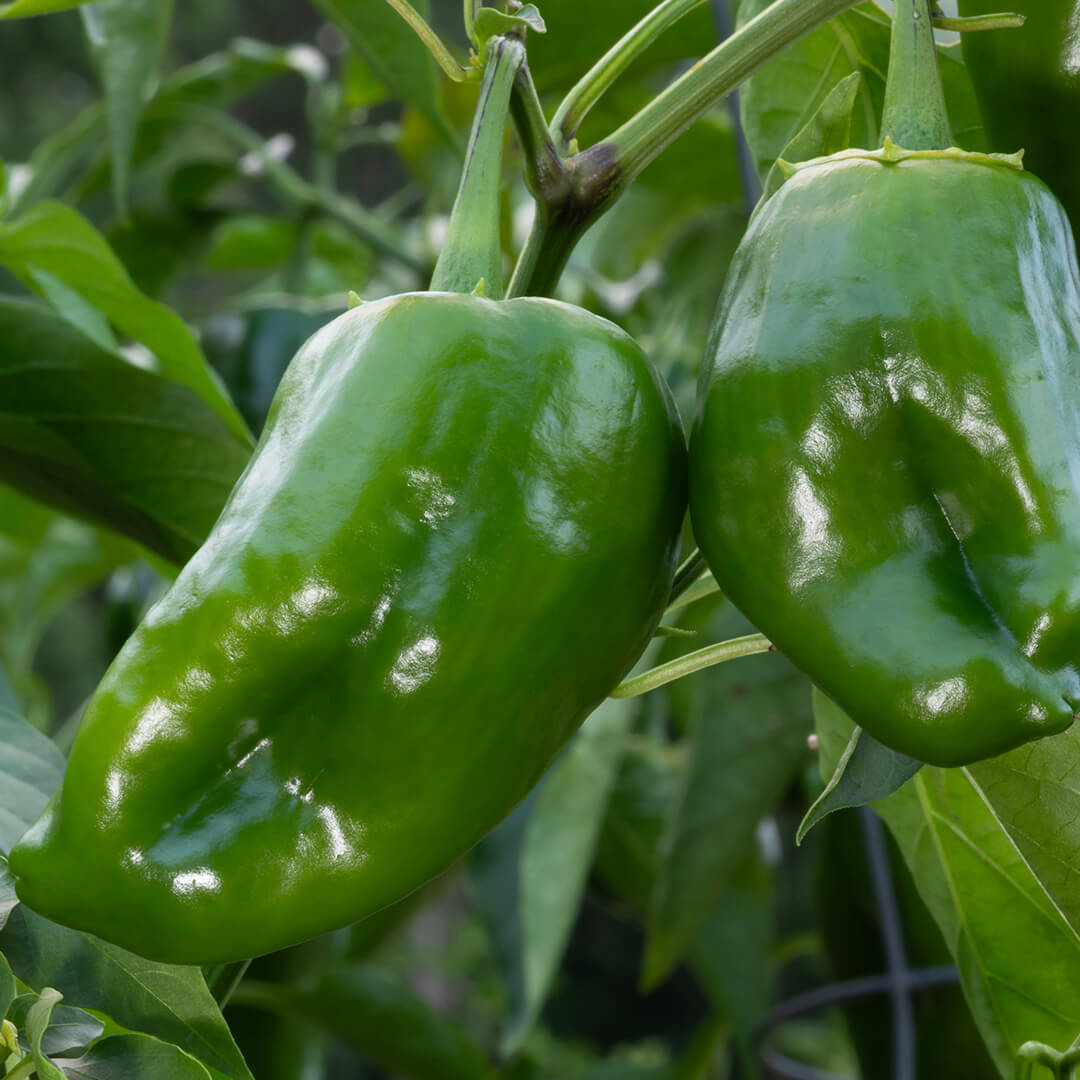
The Poblano is a Capsicum annuum from Puebla in Mexico, which gives it its name. The large, glossy, dark green pods are heart or triangle-shaped, some 10 to 15cm long, ripening to a deep red-brown if left on the plant. Fresh and green, it's the poblano; ripened and dried, it becomes the ancho, one of the "holy trinity" of mole chillies. A sturdy, productive plant carries a generous crop.
The flavour is the whole appeal: rich, earthy and slightly sweet, with a gentle warmth rather than any real fire. Fresh poblanos have a lovely deep, almost smoky vegetal flavour that's wonderful roasted, while the dried ancho develops sweet, raisiny, mild-cocoa notes. It's a pepper prized for depth and body, not heat.
This one's for the cook, and it suits everyone from beginners to serious Mexican-food enthusiasts. It's easy to grow, productive, mild enough for the whole family, and endlessly useful, superb stuffed, roasted, in sauces, or dried for mole. If you want one mild, versatile, deeply flavoured chilli in the garden, the Poblano is hard to beat. No heat tolerance required.
Cultivation
Cultivation
As a mild annuum, the Poblano is straightforward and rewarding to grow, and quicker off the mark than the superhots, which makes it a great choice for beginners.
Sow seeds indoors from late August to September. You can start in July with steady warmth, but there's less urgency than with the slow chinense types, so spring sowing suits it well.
If you like, soak seeds for 12 to 24 hours before sowing to soften the coat, then pat them dry. Sow two seeds per cell, about 3 to 4 mm deep, in good seed-raising mix. Keep them consistently warm at 20 to 30 degrees Celsius. Annuum seeds are generally obliging and usually germinate within a week or two.
Keep the mix moist but never soggy. Once seedlings are up with a couple of true leaves, pot them on and keep them warm and bright.
When they reach 100 to 150mm tall and the weather has warmed properly, move them to their final home, in the ground or a pot of 20 litres or so. Full sun and a bit of shelter, and they'll get on with it.
The plant is sturdy and bushy, typically around a metre, and the large pods carry some weight, so a stake keeps it upright once it's cropping well.
Nothing come up yet? Read why chilli seeds can be slow to germinate.
Growing
Growing
The Poblano makes a sturdy, bushy, productive plant, typically around a metre, and a generous cropper of those large, heart-shaped pods. A stake is worth having once it's carrying a load.
Pinch out the main growing tip early to encourage branching. More branches means more flowering sites, which means a heavier crop of those big pods.
Water consistently, keeping the soil evenly moist. Larger-fruited peppers like this can be a touch prone to blossom end rot if watering is erratic, those dark sunken patches on the pod tips, so steady is the goal, especially for potted plants that dry out fast in a NZ summer.
Go easy on the feeding. As with most fruiting peppers, too much nitrogen gives you a lush leafy plant and fewer fruits. A tomato fertiliser at flowering is plenty.
It's a reliable, productive cropper. Pick green for fresh poblanos, or let the pods ripen fully red-brown on the plant if you want to dry them into anchos. Keep picking to keep the plant productive.
Like many chillies, it can be overwintered as a perennial. Bring it somewhere frost-free, cut it back in autumn, and it'll return in spring with a head start on anything grown from seed.
Harvesting
Harvesting
Expect your first pods around 75 to 90 days from transplant to the green stage, which is quick as chillies go, with a few more weeks needed if you want them fully ripe for drying.
You can pick at two stages. Green and glossy, they're the classic poblano, firm and meaty, ideal for roasting and stuffing, which is how most people use them. Left on the plant, they ripen to a deep red-brown, at which point they're dried into anchos for sauces and mole. Pick according to what you're cooking.
Snip them off with scissors rather than tugging, since the branches can be brittle on a loaded plant. And pick regularly to keep the plant flowering and fruiting.
No gloves needed here. At 1,000 to 2,000 SHU there's little on these pods to trouble your hands, which makes harvesting and prep relaxed affairs.
For storage, roasting is the classic route for fresh poblanos: char the skins, steam and peel, and the roasted flesh freezes beautifully for use through the year. For drying, let the pods ripen fully red-brown, then dry them into anchos, which keep for months in an airtight container. Fresh pods hold a week or so in the fridge.
Heat Levels
Heat Levels
Let's set expectations: this is a mild chilli, sitting at around 1,000 to 2,000 SHU. That's gentle, on a par with a mild jalapeno at most and often milder, the kind of warmth most people will barely register as heat. Its whole appeal is flavour over fire.
What you get instead of burn is a rich, earthy, slightly sweet flavour with a gentle warmth, the kind that adds depth and body to a dish rather than heat. Fresh poblanos have a wonderful deep, roasted-vegetal quality, while dried anchos develop sweet, raisiny, mild-cocoa notes. It's a pepper prized entirely for its flavour.
There's a small catch worth knowing: poblano heat can occasionally be a little unpredictable, and the odd pod will surprise you with a bit more kick than expected, particularly from a hot, dry season. But the average pod is reliably mild, and it's one of the most family-friendly chillies going.
For most cooks, that gentle warmth is exactly the appeal. It lets the rich flavour lead, works for the whole household, and makes the Poblano one of the most useful and versatile chillies you can grow.
Pests and Diseases
Pests and Diseases
An easygoing, productive plant with the usual short watch-list.
Aphids will go for the soft new growth in spring. A blast from the hose or a squash between the fingers handles small numbers, and ladybirds and lacewings do the rest if you let them. Whitefly can build up in a warm greenhouse, so yellow sticky traps and decent airflow keep them honest.
At the seedling stage, damping off is the main risk. Use fresh seed-raising mix, avoid overwatering, and give trays a bit of air movement. Slugs and snails will happily mow down young transplants overnight, so protect new plantings until they've toughened up.
Being a larger-fruited pepper, the Poblano can be a touch prone to blossom end rot if watering is erratic, showing as dark sunken patches on the pod ends. It's a calcium-uptake hiccup brought on by inconsistent moisture, not a disease, and steady watering prevents it. Root rot from waterlogged soil is the other classic, seen off by free-draining mix and sensible watering.
Nothing here is dramatic. A well-watered, well-drained plant in a sunny spot will crop happily and generously all season.
Dishes
Dishes
The Poblano is a cook's mild chilli of the first order, and its size, gentle heat and rich flavour make it wonderfully versatile.
Chiles rellenos are its signature. That large, meaty pod is made for stuffing: roasted and peeled, filled with cheese, battered and fried, it's one of the great Mexican dishes, and the Poblano is the classic pepper for it. Its mild heat and rich flavour make it a genuine crowd-pleaser.
Roasting is where the flavour sings. Char the skins, peel, and you've got deep, smoky-sweet strips for tacos, quesadillas, rajas, soups and sauces. Roasted poblano is a staple of Mexican cooking, and it freezes beautifully.
Dried as ancho, it's a cornerstone of the great sauces. As one of the holy trinity of mole chillies, the ancho brings sweet, raisiny, mild-cocoa depth to moles, adobos and salsas, rehydrated and blended into rich, dark sauces. Ground into powder, it's a superb, mild, sweet seasoning.
The through-line is depth and versatility without heat. Because it's mild, the Poblano plays well with almost everything and adds a rich, earthy body that hotter chillies can't, precisely because they'd overwhelm the dish. Fresh or dried, it's one of the most useful chillies a cook can grow.
Recipes
Recipes
Recipes from our kitchen using Poblano:
| Heat Level: | 1,000 – 2,000 SHUs |
| Type: |
Mild |
| Species: |
Capsicum annuum |
| Origin: | Mexico |
| Days to Harvest: | 75-90 days |
| Seeds per Pack: | 10+ pepper seeds |
Share


Thanks
Excellent service.
Seeds arrived with a couple of days of ordering.
Poblano Seeds
Our seeds were lost in the mail, and after a bunch of back and forth with the post, Ignition sent some new seeds very quickly! I cannot wait until I get some poblanos growing at home.
Poblano Seeds