

Ignition Seed Company
Pimenta Leopard Seeds
Pimenta Leopard Seeds
Couldn't load pickup availability
General
General
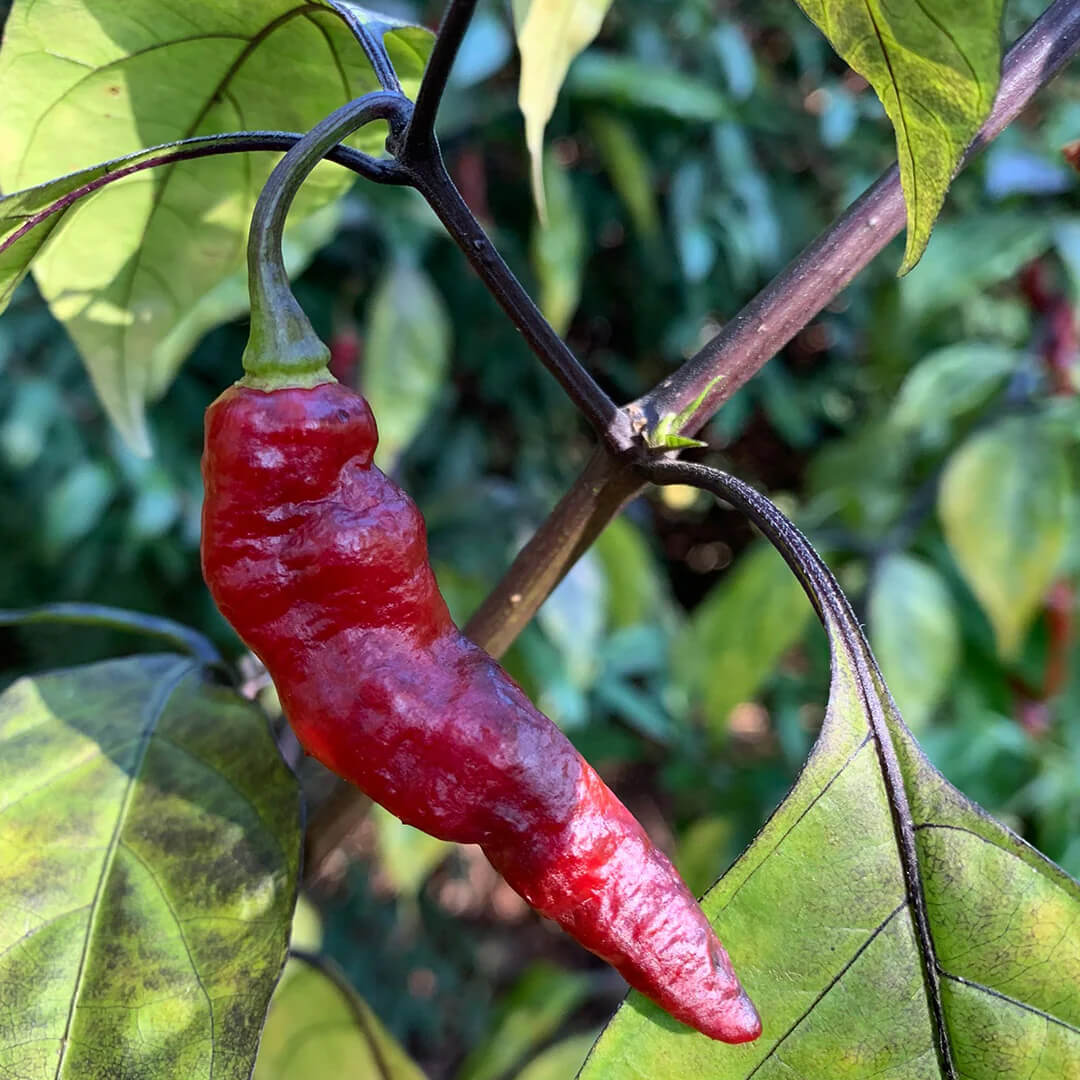
Some chillies wear their drama on the outside, and the Pimenta Leopard is a genuine showpiece. It's a striking Italian-bred chinense with spectacular colour changes, pods that start purplish-black and ripen to a bright red splashed with dark purple spotting, the "leopard" markings that give it its name. Paired with dark stems and moody foliage, it's one of the best-looking hot chillies you can grow.
The looks come with serious credentials. The Pimenta Leopard is a cross between the Bhut Jolokia (ghost pepper) and the deep-purple Pimenta de Neyde, created by Italian growers. From the ghost side it inherits real, fierce heat and a fruity chinense character; from the Neyde side, those dramatic dark pigments. The result sits hotter than a habanero and, in most descriptions, somewhere below the full ghost, a fearsome but genuinely usable level of heat.
The flavour is classic fruity chinense, with a slight sweetness under the fire, much in the style of its ghost parent. Being a relatively recent and not-fully-stable cross, the pods vary a little in colour and shape, sometimes throwing green or orange tones alongside the signature purple-and-red, which is all part of growing something at the cutting edge.
This one's for the maker and the collector. It's a brilliant "maker's chilli" for sauces, ferments, powders, oils and pickles, where its colour and aroma matter as much as its burn, and a real conversation piece in the garden. The heat is serious, so it's a step up for beginners, but for anyone ready for ghost-adjacent territory, it's a beauty.
Cultivation
Cultivation
As a chinense, the Pimenta Leopard wants a long, warm season and a measure of patience, so getting the timing right matters, especially in NZ.
Start seeds indoors from late August to September. You can go as early as July with steady warmth, but there's no beating a cold windowsill, and chinense seeds sulk when they're cold. Give them the season they need.
If you like, soak seeds for 12 to 24 hours before sowing to soften the coat, then pat them dry. Sow two seeds per cell, about 3 to 4 mm deep, in good seed-raising mix. Then give them consistent warmth around 20 to 30°C, ideally the warmer end. A heat pad earns its keep with chinense varieties. Pick one warm spot and leave the tray put, because steady beats spiky every time.
Patience helps here. Chinense seeds are slow, often two to four weeks or more to germinate, and the slow ones aren't dead, just unhurried. Keep the mix moist but never soggy and hold your nerve.
Once seedlings are up with a couple of true leaves, pot them on and keep them warm and bright. The dark pigment in the foliage often deepens in good light, so give seedlings plenty of brightness. Don't rush them outdoors: wait until they're 100 to 150mm tall and all frost risk has passed, then harden them off over a week or so.
For their final home, go big. At least 20 litres, and 30 litres or more will reward you with a bigger plant and a heavier crop. Full sun, shelter from wind, and in cooler parts of the country a greenhouse or tunnel house makes the difference between a handful of pods and a proper harvest.
Nothing come up yet? Read why chilli seeds can be slow to germinate.
Growing
Growing
The Pimenta Leopard makes a tall, vigorous plant, often around 1.5 metres, with striking dark stems and foliage, and it's a good cropper of those dramatic pods. A stake is worth having once it starts loading up.
Pinch out the main growing tip early to encourage branching. It always feels wrong cutting growth off a plant you've raised from seed, but the payoff is a bushier plant with more flowering sites and more of those leopard-spotted pods.
Water consistently, keeping the soil moist but never waterlogged. Chinense varieties hate wet feet, and pots dry fast in a NZ summer, so check them daily once the heat sets in. Steady watering also heads off blossom end rot on the pods.
Feed with a tomato fertiliser once flowering starts. Chillies and tomatoes want much the same things, so there's no need to overcomplicate it.
Full sun brings out the best colour: the more light, the deeper and richer those dark pigments in the stems, foliage and pods. Heat and sun also drive cropping, which is why greenhouse growers get the most from chinense varieties in cooler regions. Up north, a sheltered sun trap outdoors does the job.
And like all chinense, it's a perennial at heart. Overwinter it somewhere frost-free, cut it back in autumn, and it'll come away again in spring with a head start on anything sown from seed. Given its vigour, an established plant is a real asset.
Harvesting
Harvesting
Count on your first ripe pods around 100 to 120 days from transplant. Chinense varieties take their time forming and colouring up, so patience pays off at this end too.
The pods ripen from purplish-black to a bright red splashed with dark purple spotting. Pick them fully ripe for the best flavour and full heat, when they feel firm and come away with a gentle tug. Being an unstable cross, expect some variation in colour and shape from pod to pod, some may show green or orange tones, which is normal for this variety. Use snips rather than pulling, since chinense branches are brittle and easily damaged.
Gloves on for this one. At this heat level, the oils on the pod skin are more than enough to make themselves felt, and whatever your hands touch for hours afterwards will remember it. Harvest and prep with gloves, wash up after, and keep your fingers away from your face.
The plant will keep flowering and setting fruit until the cold shuts it down, so expect a staggered harvest through late summer and autumn. Any pods still dark or unripe at season's end will keep ripening off the plant, or can be used as they are.
For storage you've got options, and this is a maker's chilli, so plenty of them. Fresh pods keep a week or two in the fridge. They freeze brilliantly whole for sauces and cooking, and the fruity flesh takes beautifully to fermenting, which is where many of the best chinense sauces begin. They dry well too for striking powders and flakes.
Heat Levels
Heat Levels
Make no mistake, this is a seriously hot chilli, most commonly cited at around 500,000 to 800,000 SHU. That places it well above the habanero and, in most descriptions, below the full ghost pepper, so it's a fearsome level of heat: roughly 100 to 160 times hotter than a jalapeño, and firmly into "handle with care" territory, even if it stops short of the outright superhots.
Worth a note of honesty here: as a relatively new and not-fully-stable cross, the Pimenta Leopard's heat is quoted with some variation across growers, with figures ranging from the habanero band up towards ghost territory depending on the source and the season. We've gone with the commonly cited 500,000 to 800,000 range, but treat it as a strong guide rather than a lab-certified figure, and expect real pod-to-pod variation.
The flavour underneath is genuine: fruity, slightly sweet chinense character, much like its ghost parent, which is exactly what makes it worth cooking with rather than merely enduring. Like most chinense heat, it builds and lingers, arriving after the initial fruity note and settling in for the long haul.
Handle it with respect. Gloves for prep, ventilation when cooking it down, and keep pods away from kids and pets. When tasting anything you've made, start with an amount that feels very small, because you can always add more and, at this heat, you rarely need to.
Pests and Diseases
Pests and Diseases
The standard chinense watch-list, with a couple of notes for a plant that loves warm, sheltered spots.
Aphids head for the soft new growth first, usually in spring. Squash small numbers or blast them off with the hose, and encourage ladybirds and lacewings to handle the rest. Whitefly thrives in a warm greenhouse, which is just where this plant wants to be, so yellow sticky traps and good airflow keep numbers down.
Spider mites are the one to watch in a hot, dry tunnel house over summer. Look for fine speckling on the leaves and webbing underneath. They love dry air, so an occasional misting and decent ventilation go a long way.
At the seedling stage, damping off is the main threat: fresh seed-raising mix, no overwatering, and a bit of air movement prevent most of it. Slugs and snails will take out young transplants overnight, so protect them until they've hardened up.
On the disease front, most trouble is water-related. Overwatering invites root rot, and erratic watering brings on blossom end rot, those dark sunken patches on the pod tips. Consistent moisture and free-draining mix prevent both. In still, humid conditions botrytis can appear on crowded plants, one more reason to prune to an open shape and give plants room.
Nothing here should put you off. A well-fed, well-drained, well-ventilated plant shrugs off most problems, and this vigorous variety is tougher than its exotic looks suggest.
Dishes
Dishes
The Pimenta Leopard is a maker's chilli through and through, prized for colour and aroma as much as for its serious heat.
Hot sauce is the natural home, and this one makes a beautiful sauce. That fruity, slightly sweet chinense character pairs well with tropical fruit like mango and pineapple, and a fermented sauce built on those lines delivers heat with real depth. A little carries a whole batch, and the pods' colour can lend a striking hue to the finished sauce.
Fermenting suits it especially well. Fruity chinense peppers like this are ideal for a ferment, developing rounded, complex flavour under the fire, the foundation of many of the best artisan hot sauces. Keep everything clean and fully submerged and let time do the work.
Powders and flakes are excellent too. The pods dry to a fruity, fiery powder that adds serious warmth by the pinch, and their dark tones can make for an unusually handsome flake. Chilli oils and pickles round out the maker's repertoire, letting you show off both the heat and the aroma.
Because it runs genuinely hot, treat it as a season-to-taste chilli rather than one to use by the handful. But for the sauce maker, fermenter or powder blender who cares about colour and flavour as well as burn, the Pimenta Leopard is a genuinely exciting pepper to work with.
| Heat Level: | 500,000 – 800,000 SHUs |
| Type: |
Super Hot |
| Species: | Capsicum chinense |
| Origin: |
Italy |
| Days to Harvest: | 100-120 days |
| Seeds per Pack: | 10+ pepper seeds |
Share