

Ignition Seed Company
Naga Brain (Red) Seeds
Naga Brain (Red) Seeds
Couldn't load pickup availability
General
General
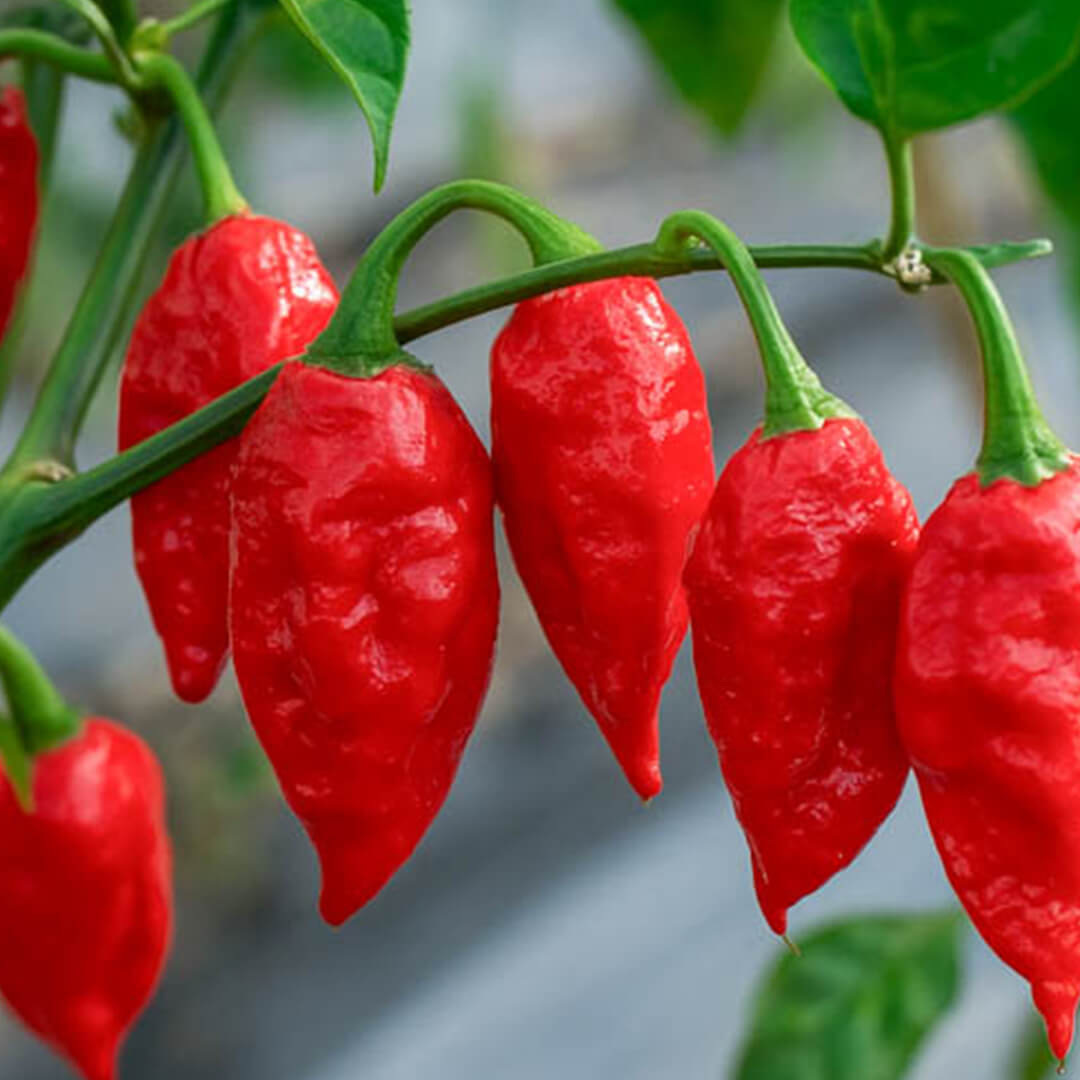
Some chillies are conversation starters. The Red Naga Brain ends them. One look at the pods tells you most of what you need to know: small, gnarled, heavily wrinkled things that look uncannily like the organ they're named after, ripening from green to a deep, warning-sign red.
The pedigree is serious. This is a cross between the 7 Pot Brain Strain and the Dorset Naga, bred in the USA, which means both parents sit in the top tier of the world's superhots. From the Brain Strain side it gets the folded, brain-like skin and fruity chinense character. From the Dorset Naga side it gets relentless heat and a work ethic, because this plant crops far more generously than something this hot has any right to.
Under the burn there's genuine flavour: fruity and slightly floral, the classic chinense profile that makes superhots worth cooking with rather than just surviving. That's what separates the Naga Brain from novelty heat. Used in sensible quantities, which is to say very small ones, it brings real character to sauces, powders and slow-cooked dishes.
Being a relatively recent cross, it still shows some variation from pod to pod. Some come out rounder like a 7 Pot, others slightly elongated like their Naga parent. Consider it a feature. Every harvest has personality.
This one's for the deep end of the pool: sauce makers, powder blenders, and growers who want a proper project with a proper payoff. If you're still working your way up the Scoville ladder, start with a habanero and come back. The Naga Brain will wait.
Cultivation
Cultivation
Superhots demand a long season, so timing matters more here than with your average chilli. In NZ, start seeds indoors from late August to September. You can push as early as July, but only if you can hold stable warmth, because cold snaps are the number one reason superhot seeds sulk or fail.
If you like, soak seeds for 12 to 24 hours before sowing to soften the seed coat. Sow two seeds per cell, about 3 to 4 mm deep, in good-quality seed-raising mix. Then give them what chinense seeds crave: consistent warmth, around 20 to 30°C, and for superhots aim at the warmer end of that range. A heat pad is honestly the best money you'll spend on this variety. Pick one warm spot and leave the tray there, because steady warmth beats heat spikes every time.
Now the hard part: patience. Naga Brain seeds can take anywhere from two to six weeks to germinate, and the slow ones are not failures, just dramatic. Keep the mix moist but never soggy and hold your nerve.
Once seedlings are up with a couple of true leaves, pot them on into individual pots and keep them warm and bright. Don't rush them outside. Wait until they're 100 to 150mm tall and all frost risk has well and truly passed, then harden them off gradually over a week or so.
For their final home, think big: at least 20 litres, and 30 to 40 litres will be rewarded with a bigger plant and a heavier crop. Full sun, shelter from wind, and in cooler parts of the country a greenhouse or tunnel house takes this variety from possible to genuinely productive.
Growing
Growing
Expect a plant somewhere around a metre tall, sturdy and well-branched, though you'll want a stake or two once it starts loading up with pods. And it will load up. For a superhot, the Naga Brain is a remarkably heavy cropper, which is either a blessing or a logistics problem depending on how many friends you have.
Pinch out the main growing tip early on to encourage branching. It feels wrong removing growth from a plant you've nursed for weeks, but the payoff is a bushier plant with more flowering sites and more pods.
Water consistently, keeping the soil moist but never waterlogged. Chinense varieties hate wet feet, and pots dry out faster than you'd think in a NZ summer, so check them daily once the heat arrives. Erratic watering also stresses the plant, and a stressed superhot puts out fewer pods, not hotter ones, whatever the forums tell you.
Feed with a tomato fertiliser once flowering starts. Chillies and tomatoes want much the same thing, and there's no need to overcomplicate it.
Heat is this plant's love language. The warmer and sunnier its position, the faster it grows and the better it crops, which is why tunnel house growers get the most out of it in cooler regions. North of Taupo, a sheltered sun trap outdoors will do nicely.
One last trick worth knowing: chinense chillies are perennials at heart. Overwinter your Naga Brain in its pot somewhere frost-free, cut it back hard in autumn, and it'll come away again in spring with a head start on anything grown from seed. A good plant can keep going for years.
Harvesting
Harvesting
Count on 100 to 120 days from transplant to your first ripe pods, which is a long wait that ends abruptly when everything seems to ripen at once.
Pods start green and mature to a deep red, with the wrinkles deepening as they go. Pick when they've fully coloured and feel slightly soft to a gentle squeeze. A ripe pod comes away easily, but do yourself a favour and use snips or scissors rather than pulling, because chinense branches are brittle and it's a shame to lose a limb's worth of future pods to enthusiasm.
Gloves are not optional. At this heat level, the oils on the skin of the pod are enough to make themselves known, and whatever your hands touch for the next few hours will remember the encounter. Harvest with gloves, wash up afterwards, and keep your fingers away from your face regardless. Every superhot grower ignores this advice exactly once.
The plant will keep flowering and setting fruit until the cold shuts it down, so expect a staggered harvest through late summer and autumn. Any green pods left when the season ends are still ferociously hot and perfectly usable, just less fruity than the ripe ones.
For storage, you're spoiled for choice. Fresh pods hold a week or two in the fridge. Whole pods freeze brilliantly and can be grated straight from frozen. Best of all, the relatively thin walls mean Naga Brains dry easily, and a dehydrator run turns your harvest into flakes and powder that'll season a year's worth of cooking from a single plant.
Heat Levels
Heat Levels
Let's not dance around it: the Red Naga Brain sits at the extreme end of the scale, commonly cited at 800,000 to 1,000,000+ SHU. As a newer variety it hasn't been through formal lab testing, but its parentage does the talking. The Dorset Naga has lab results well past the million mark, and the 7 Pot Brain Strain runs in the same league, so the Naga Brain didn't fall far from either tree.
For a sense of scale, that puts it shoulder to shoulder with the ghost pepper and somewhere between 150 and 300 times hotter than a jalapeño, depending on the pod and the jalapeño.
Individual pods will vary. Heat in any chilli shifts with the season, the sun, the seed line and how the plant was treated, and superhots swing more than most. A long hot summer produces angrier pods than a cool damp one. What doesn't vary is the character of the burn: like most chinense heat it builds slowly, arrives thoroughly, and stays well past its welcome. The first thirty seconds are not an accurate forecast.
Treat it accordingly. Gloves for handling, ventilation when cooking, and keep pods well away from kids and pets. When tasting anything you've made with it, start with an amount that feels insultingly small. You can always add more, and with a Naga Brain you almost never need to.
None of this is meant to put you off. It's meant to keep you enjoying it, because under all that fire is a genuinely good-tasting chilli, and the whole point of growing one is getting to use it.
Pests and Diseases
Pests and Diseases
The usual suspects apply, with a couple of superhot-specific notes.
Aphids will find the soft new growth first, usually in spring. Small numbers can be squashed or blasted off with the hose, and ladybirds and lacewings will happily do the ongoing work if you let them. Whitefly loves a warm greenhouse, which is unfortunate given that's exactly where your Naga Brain wants to live. Yellow sticky traps knock the population back, and good airflow makes the space less inviting in the first place.
Spider mites are the one to watch in a hot, dry tunnel house over summer. Look for fine speckling on leaves and webbing on the undersides. They thrive in dry air, so an occasional misting of the foliage and decent ventilation go a long way.
At the seedling stage, damping off is the main threat: sow in fresh seed-raising mix, don't overwater, and give trays some air movement. Slugs and snails will take out young transplants overnight, so protect new plantings until they've toughened up.
On the disease front, most trouble is water-related. Overwatering invites root rot, and irregular watering can bring on blossom end rot, which shows as dark sunken patches on pod tips. Consistent moisture and free-draining mix prevent most of it. In humid, still conditions botrytis can appear on crowded plants, which is one more argument for pruning to an open shape and not planting things cheek by jowl.
Nothing here should scare you off. A well-fed, well-drained, well-ventilated plant shrugs off most problems, and chillies are tougher than their exotic reputation suggests.
Dishes
Dishes
This is a seasoning, not a vegetable. Get that settled early and the Naga Brain becomes one of the most useful things in your kitchen.
Hot sauce is the natural destination. The fruity, floral chinense profile pairs beautifully with mango, pineapple or peach, and a fermented sauce built on those lines delivers heat with genuine depth rather than just pain. One or two pods will carry an entire batch, so a single plant keeps a sauce maker in raw material for the year.
Powder and flakes might be even better. The thin walls dry quickly and grind to a powder that adds serious warmth by the quarter teaspoon. Sprinkle it like you're seasoning with plutonium and you'll get it about right.
In the pot, think fractions. A quarter of a pod, seeds and pith removed, will make its presence felt through a whole batch of chilli con carne or a family curry. The Naga side of its family tree comes from a long tradition of Bangladeshi naga curries, and it's superb used that way, simmered whole in the sauce and fished out before serving for flavour and controlled fire.
A frozen pod is the easiest dosing tool of all: grate a little straight into the pan like fiery parmesan and return the rest to the freezer.
Chilli oil and infused vinegar work well too, made gently and labelled clearly, because unlabelled Naga Brain oil is how household incidents happen.
And if someone suggests eating one whole as a dare, that's between them and their decisions. Recipes that call for a whole pod per serving are written by people you shouldn't trust.
| Heat Level: | 800,000 - 1,000,000 SHUs |
| Type: | Super Hot |
| Species: | Capsicum chinense |
| Origin: |
USA |
| Days to Harvest: | 100-120 days |
| Seeds per Pack: | 10+ pepper seeds |
Share