


Ignition Seed Company
Mulato Isleno Seeds
Mulato Isleno Seeds
Couldn't load pickup availability
General
General
Some chillies are all about flavour, and the Mulato Isleno is a cornerstone of real Mexican cooking. It's a mild, meaty poblano-type pepper that dries to a rich chocolate brown and becomes the mulato, one of the essential chillies of the great mole sauces. If you cook Mexican food seriously, this is a plant worth having.
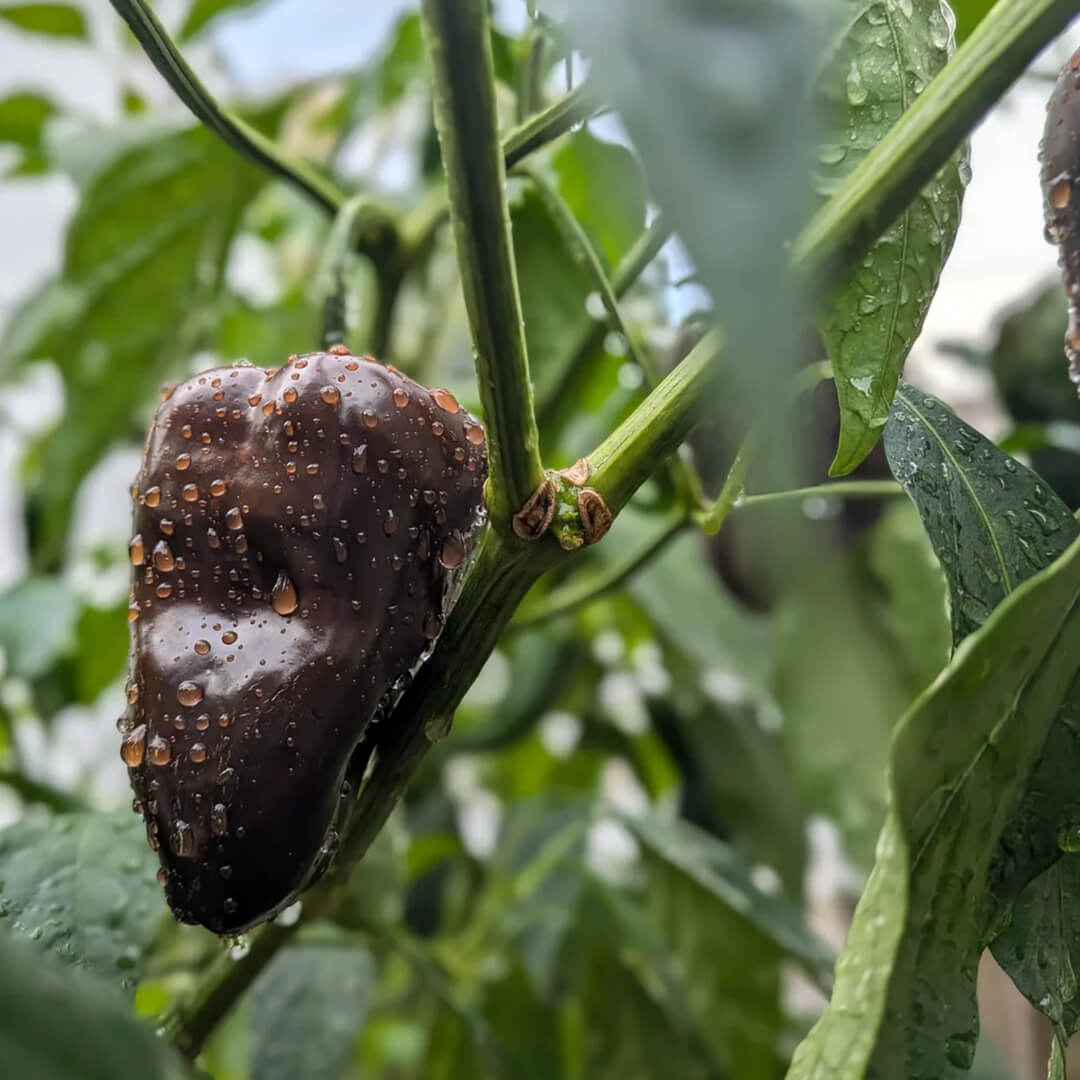
The Mulato Isleno is a Capsicum annuum, a type of poblano, and one of the "holy trinity" of chillies (with the ancho and pasilla) that form the base of Mexico's most famous moles. The large, heart-shaped pods, up to 15cm long, ripen from green to a deep brown, rather than the red of a standard poblano, and it's this brown-ripening quality that gives the dried mulato its distinctive character. Fresh, it's a mild, meaty pepper; dried, it's where the magic happens.
The flavour is the whole point. Fresh, it's mild and full-bodied with a gentle sweetness. Dried, it develops a wonderful complexity: sweet and earthy with a distinct chocolate-like, liquorice note and a subtle smokiness, quite different from the raisiny ancho or the tannic pasilla. It's rich and satisfying without any real heat.
This one's for the cook. If you make mole, stuff and roast peppers, or want a mild, deeply flavoured chilli the whole household can enjoy, the Mulato Isleno is a genuine kitchen workhorse. No heat tolerance required, just an appreciation for good flavour.
Cultivation
Cultivation
As a mild annuum, the Mulato Isleno is fairly approachable to grow, though it's noted as a long-season variety, so give it a good head start in NZ to ripen and dry those big pods.
Sow seeds indoors from late August to September. You can start in July with steady warmth, and given its long season, an early start is worthwhile here.
If you like, soak seeds for 12 to 24 hours before sowing to soften the coat, then pat them dry. Sow two seeds per cell, about 3 to 4 mm deep, in good seed-raising mix. Keep them consistently warm at 20 to 30 degrees Celsius. Annuum seeds are generally obliging and usually germinate within a week or two.
Keep the mix moist but never soggy. Once seedlings are up with a couple of true leaves, pot them on and keep them warm and bright.
When they reach 100 to 150mm tall and the weather has warmed properly, move them to their final home, in the ground or a pot of 20 litres or so. Full sun and a bit of shelter, and they'll get on with it.
The plant is short, stocky and bushy, typically around a metre, and the large pods carry some weight, so a stake keeps it upright once it's cropping well.
Growing
Growing
The Mulato Isleno makes a short, stocky, bushy plant, typically around a metre and a little bigger in full sun, and it's a productive cropper of those large, heart-shaped pods. A stake is worth having once it's carrying a load.
Pinch out the main growing tip early to encourage branching. More branches means more flowering sites, which means a heavier crop of those big pods.
Water consistently, keeping the soil evenly moist. Larger-fruited peppers like this can be a touch prone to blossom end rot if watering is erratic, those dark sunken patches on the pod tips, so steady is the goal, especially for potted plants that dry out fast in a NZ summer.
Go easy on the feeding. As with most fruiting peppers, too much nitrogen gives you a lush leafy plant and fewer fruits. A tomato fertiliser at flowering is plenty.
Because it's mostly used dried, and it's a long-season pepper, you'll want to let the pods ripen fully to deep brown on the plant before drying them, so give the season time to do its work. Keep picking to keep the plant productive.
Like many chillies, it can be overwintered as a perennial. Bring it somewhere frost-free, cut it back in autumn, and it'll return in spring with a head start, handy given its long season.
Harvesting
Harvesting
Expect your first pods around 90 to 100 days from transplant, and often a little longer given the long season, especially if you want them fully ripe and brown for drying.
You can use them fresh and green as a mild, meaty poblano-type for stuffing and roasting, but the Mulato Isleno is really at its best ripened brown and dried, when its sweet, earthy, chocolate-liquorice character develops. Let the pods ripen fully to a deep brown on the plant, then dry them down into the mulato.
Snip them off with scissors rather than tugging, since the branches can be brittle on a loaded plant. And pick regularly to keep the plant flowering and fruiting.
No gloves needed here. At 1,000 to 2,000 SHU there's little on these pods to trouble your hands, which makes harvesting and prep relaxed affairs.
For storage, drying is the traditional and best route, and the Mulato Isleno dries into the classic mulato negro. Dry the ripe brown pods in a dehydrator or a warm, airy spot until leathery but still pliable (a good mulato bends without snapping), and they'll keep for many months in an airtight container away from light. Fresh pods keep a week or so in the fridge, and both fresh and dried freeze well.
Heat Levels
Heat Levels
Let's set expectations: this is a mild chilli, sitting at around 1,000 to 2,000 SHU. That's gentle, on a par with a standard poblano and below a jalapeno, the kind of warmth most people will barely register as heat. Its whole appeal is flavour over fire.
What you get instead of burn is a warm, gentle background heat that sits beneath the flavour rather than on top of it. It's the kind of mildness that lets the sweet, earthy, chocolatey character take centre stage, which is exactly why the mulato is so valued in complex dishes like mole, where a dozen ingredients need to speak without any one shouting.
As with any chilli, growing conditions nudge the number a little, and a long hot summer can push it towards the upper end of that modest range. But this pepper was never about heat, and its mildness is precisely what makes it so useful.
For most cooks, the mulato's gentle warmth is a feature, not a shortcoming. It's a chilli you use for depth and richness, and one the whole family can eat.
Pests and Diseases
Pests and Diseases
An easygoing plant with the usual short watch-list.
Aphids will go for the soft new growth in spring. A blast from the hose or a squash between the fingers handles small numbers, and ladybirds and lacewings do the rest if you let them. Whitefly can build up in a warm greenhouse, so yellow sticky traps and decent airflow keep them honest.
At the seedling stage, damping off is the main risk. Use fresh seed-raising mix, avoid overwatering, and give trays a bit of air movement. Slugs and snails will happily mow down young transplants overnight, so protect new plantings until they've toughened up.
Being a larger-fruited pepper, the Mulato Isleno can be a touch prone to blossom end rot if watering is erratic, showing as dark sunken patches on the pod ends. It's a calcium-uptake hiccup brought on by inconsistent moisture, not a disease, and steady watering prevents it. Root rot from waterlogged soil is the other classic, seen off by free-draining mix and sensible watering.
If you're drying your harvest, watch ripe pods for any soft spots before they go into the dehydrator, and dry them promptly once fully coloured. Nothing here is dramatic, though. A well-watered, well-drained plant in a sunny spot will crop happily all season.
Dishes
Dishes
This is a flavour chilli through and through, and Mexican cooking is where it belongs, particularly the great sauces.
Mole is the pinnacle. As one of the holy trinity of mole chillies, the mulato brings a sweet, earthy, chocolate-and-liquorice depth that's essential to a proper mole negro or mole poblano, working alongside the raisiny ancho and the tannic pasilla to build the sauce's complex base. Toasted gently, soaked and blended with its companions, it's a foundation stone of Mexico's most celebrated dishes. Toast it carefully, though, since burnt mulato turns bitter.
Fresh and green, it's a mild, meaty pepper excellent for stuffing (much like a poblano, for chiles rellenos) and for roasting, where its full body and gentle flavour shine.
Beyond mole, dried mulato is a workhorse of adobos, salsas and sauces, rehydrated and blended for a rich, dark, subtly sweet result. And ground into powder, it makes a superb, complex seasoning for rubs, beans, soups and braises, adding depth and that distinctive chocolatey note.
The through-line is rich, chocolatey depth without heat. Because it's mild, the mulato plays well with almost everything and adds a warmth and complexity that hotter chillies can't, precisely because they'd overwhelm the dish. This is a chilli you cook with for flavour, and one that makes you a better cook for having it.
Recipes
Recipes
| Heat Level: | 1,000 – 2,000 SHUs |
| Type: | Mild |
| Species: |
Capsicum annuum |
| Origin: | Mexico |
| Days to Harvest: | 90-100 days |
| Seeds per Pack: | 10+ pepper seeds |
Share


Hard to say much as it’s not planting season yet, but happy to do a review once the plant grows & fruits. I did notice one of the bags of seeds I brought was just in a plain clear bags unlike the other well presented & described seeds.