


Ignition Seed Company
Friariello Pepper Seeds
Friariello Pepper Seeds
Couldn't load pickup availability
General
General
If you've ever eaten in a proper Neapolitan trattoria, you've probably met the Friariello: slender green peppers fried whole in olive oil with garlic and salt, served as a side or heaped onto a sandwich. This is that pepper, a classic Italian frying variety from the Campania region around Naples, and growing your own is the closest you'll get to southern Italy without the flight.
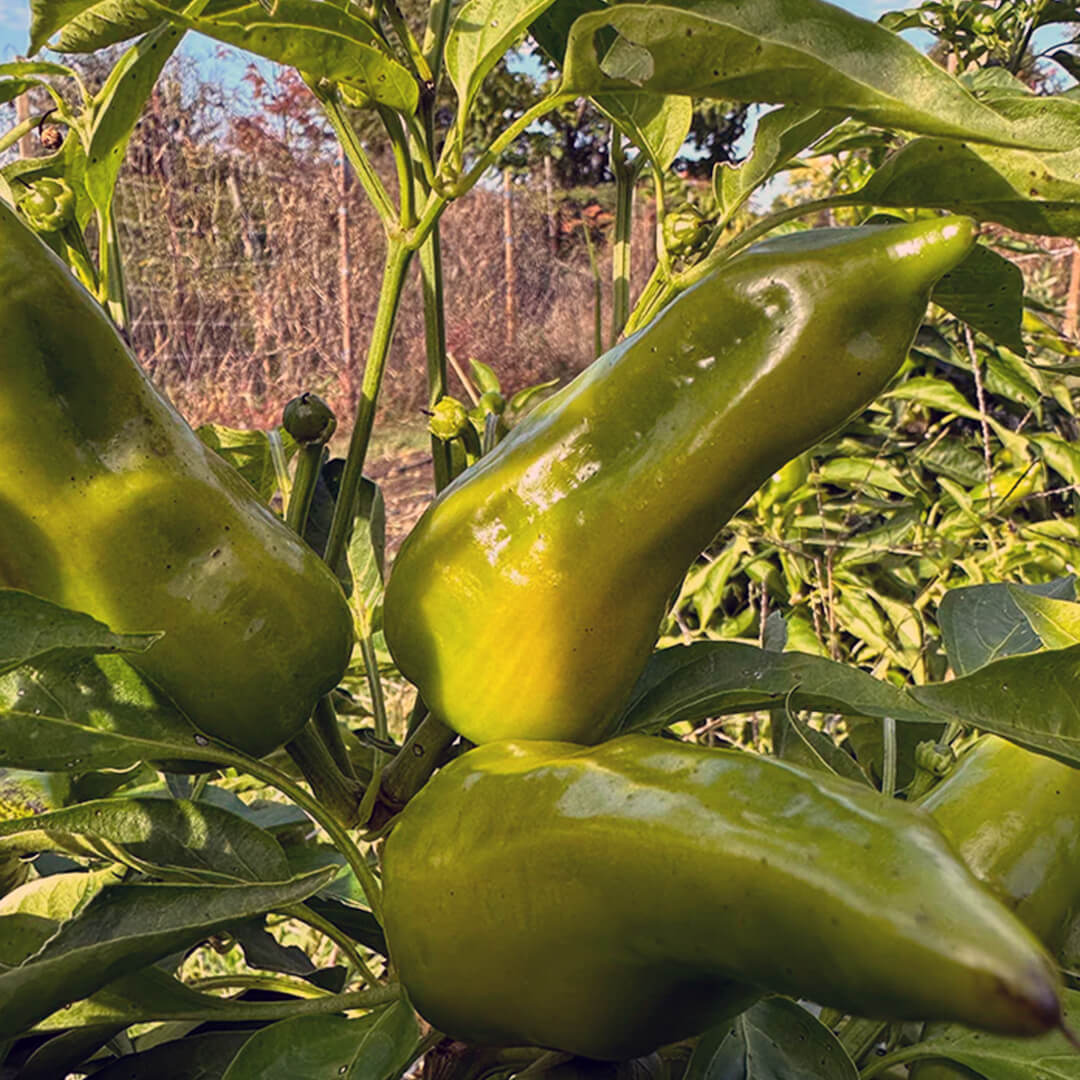
The name comes from the Italian friggere, "to fry", and that's the whole point of it. These are peppers born to hit a hot pan. The slender, tapering pods, up to about 12cm, grow deep green and ripen to red, though they're most prized picked green, when they're at their sweet, full-flavoured best. The taste is strong and distinctive, sweet and moreish, with just a gentle kick rather than serious heat.
A quick note on names, because Italian peppers are a minefield: this is the true Friariello (sometimes Friariello di Nocera or di Napoli), a mild frying pepper, not to be confused with friarielli, which in Naples means broccoli rabe, an entirely different thing. What you're growing here is the pepper, destined for the frying pan.
This one's for the cook who loves Italian food and wants the real ingredient. It's productive, easy to grow, and endlessly useful in the kitchen, and there's genuine pleasure in frying up a panful of peppers you've grown yourself. A staple of the Campanian table, and a lovely thing to have in the garden.
Cultivation
Cultivation
As a mild annuum, the Friariello is one of the easier chillies to grow, and pleasingly quick to crop, so it's a great one for beginners and the impatient alike.
Sow seeds indoors from late August to September. You can start in July with steady warmth, but this is a fast, obliging variety, so spring sowing suits it well.
If you like, soak seeds for 12 to 24 hours before sowing to soften the coat, then pat them dry. Sow two seeds per cell, about 3 to 4 mm deep, in good seed-raising mix. Keep them consistently warm at 20 to 30°C. Annuum seeds are generally reliable and usually germinate within one to two weeks.
Keep the mix moist but never soggy. Once seedlings are up with a couple of true leaves, pot them on and keep them warm and bright.
When they reach 100 to 150mm tall and the weather has warmed properly, move them to their final home, in the ground or a pot of 20 litres or so. Full sun and a bit of shelter suit them well, as they like warmth and won't tolerate frost.
The plant grows to around 60 to 90cm and is very productive, so a stake keeps it upright and the fruit off the ground once it's cropping in earnest.
Nothing come up yet? Read why chilli seeds can be slow to germinate.
Growing
Growing
The Friariello makes a productive, bushy plant of around 60 to 90cm, and it crops generously, giving you plenty of peppers right through summer.
Pinch out the main growing tip early to encourage branching. More branches means more flowering sites, which on a productive pepper like this means a heavier crop of frying peppers.
Water consistently, keeping the soil evenly moist. Erratic watering can bring on blossom end rot, those dark sunken patches on the pod tips, and can also make the fruit slightly bitter, so steady is the goal, especially for potted plants that dry out fast in a NZ summer.
Go easy on the feeding. As with most fruiting peppers, too much nitrogen gives you a lush leafy plant and fewer fruits. A tomato fertiliser at flowering is plenty.
Keep picking, and pick often. This is a cut-and-come-again sort of crop, and the more you harvest those young green pods, the more the plant produces. One or two plants will keep a household in frying peppers through the season.
Like many chillies, it can be overwintered as a perennial. Bring it somewhere frost-free, cut it back in autumn, and it'll return in spring with a head start.
Harvesting
Harvesting
Expect your first pods around 65 to 80 days from transplant, which is quick as chillies go and one of the joys of this variety.
For the classic Friariello, pick them young and green, at around 7 to 10cm, when they're at their sweet, tender best for frying. Left on the plant they'll ripen to red, turning a little sweeter, which suits them for frying too or for pickling, but the traditional harvest is green.
Snip them off with scissors rather than tugging, since the branches can be brittle on a loaded plant. And pick regularly, because a constantly harvested plant keeps flowering and fruiting far longer than one left to sit.
No gloves needed here, assuming the mild end of its range. Even at its warmest this is a gentle pepper, so harvesting and prep are relaxed affairs.
For storage, these are really best used fresh, ideally straight into the frying pan while they're at their tender best. They keep a few days in the fridge, and they freeze reasonably well if you blanch or fry them first. A glut is easily dealt with by frying a big batch and saving some for pasta the next day.
Heat Levels
Heat Levels
Here's where the honesty matters: the Friariello is a mild pepper, but "mild" spans a range, and this one is generally quoted anywhere from a barely-there 100 SHU up to around 20,000 SHU depending on the exact strain and how it's grown. The traditional Neapolitan frying pepper sits at the gentle end, a sweet pepper with just a whisper of warmth, but some strains carry a genuine, if modest, kick.
For most cooks and most dishes, treat it as a sweet, gently warm pepper rather than a hot one. The heat, where it's present, is a background hum that rounds out the flavour rather than lighting you up, which is exactly what you want in a pepper you're eating by the panful.
As with any chilli, growing conditions nudge the number. A long hot summer, and letting the pods ripen to red, will bring out a touch more warmth, while young green pods picked early are milder. If you're sensitive to heat, pick them green and young and you'll barely notice it.
The takeaway: this is a flavour pepper, not a heat pepper. Its sweet, moreish taste is the reason to grow it, and whatever modest warmth it carries is just a pleasant bonus.
Pests and Diseases
Pests and Diseases
An easygoing, productive plant with the usual short watch-list.
Aphids will go for the soft new growth in spring. A blast from the hose or a squash between the fingers handles small numbers, and ladybirds and lacewings do the rest if you let them. Whitefly can build up in a warm greenhouse, so yellow sticky traps and decent airflow keep them honest.
At the seedling stage, damping off is the main risk. Use fresh seed-raising mix, avoid overwatering, and give trays a bit of air movement. Slugs and snails will happily mow down young transplants overnight, so protect new plantings until they've toughened up.
Being a heavy fruiter, the Friariello can be prone to blossom end rot if watering is erratic, showing as dark sunken patches on the pod ends. It's a calcium-uptake hiccup brought on by inconsistent moisture, not a disease, and steady watering prevents it. Overwatered, waterlogged soil brings the usual risk of root rot, seen off by free-draining mix and sensible watering.
Nothing here is dramatic. A well-watered, well-drained plant in a sunny spot will crop happily and generously all season.
Dishes
Dishes
The Friariello is a cook's pepper, and it does one thing supremely well while turning its hand to plenty else.
Frying is its calling, and there's a reason the name means "to fry". The classic Neapolitan preparation is the whole peppers, stems and all, fried in good olive oil with a clove of garlic and a scatter of salt, then eaten with your hands by the stem. Simple, fast, and utterly moreish. It's the definitive way to enjoy them, and it takes minutes.
From there, the variations flow. Add halved cherry tomatoes to the pan and let them soften into a sauce, throw in cubed potatoes for a heartier side, or stir the fried peppers through spaghetti the next day, a classic Campanian way with leftovers. They make a wonderful sandwich filling too, especially alongside a burger or sausage.
Picked red, they're good pickled, and they take well to roasting, where their sweetness deepens. But fresh and fried is where they belong, and it's the dish that'll have you growing them every year.
The through-line is simple, sweet, Italian home cooking. This is a pepper for eating in quantity, gently warm and full of flavour, and one that connects your garden straight to a Neapolitan kitchen table.
Recipes
Recipes
Recipes from our kitchen using Friariello Pepper:
| Heat Level: | 5,000 – 20,000 SHUs |
| Type: |
Medium |
| Species: |
Capsicum annuum |
| Origin: | Italy |
| Days to Harvest: | 65-80 days |
| Seeds per Pack: | 10+ pepper seeds |
Share


I have not tried this pepper before, so we will see how they go.
Enjoy – and good luck with your growing!