

Ignition Seed Company
Fatalii (White) Seeds
Fatalii (White) Seeds
Couldn't load pickup availability
General
General
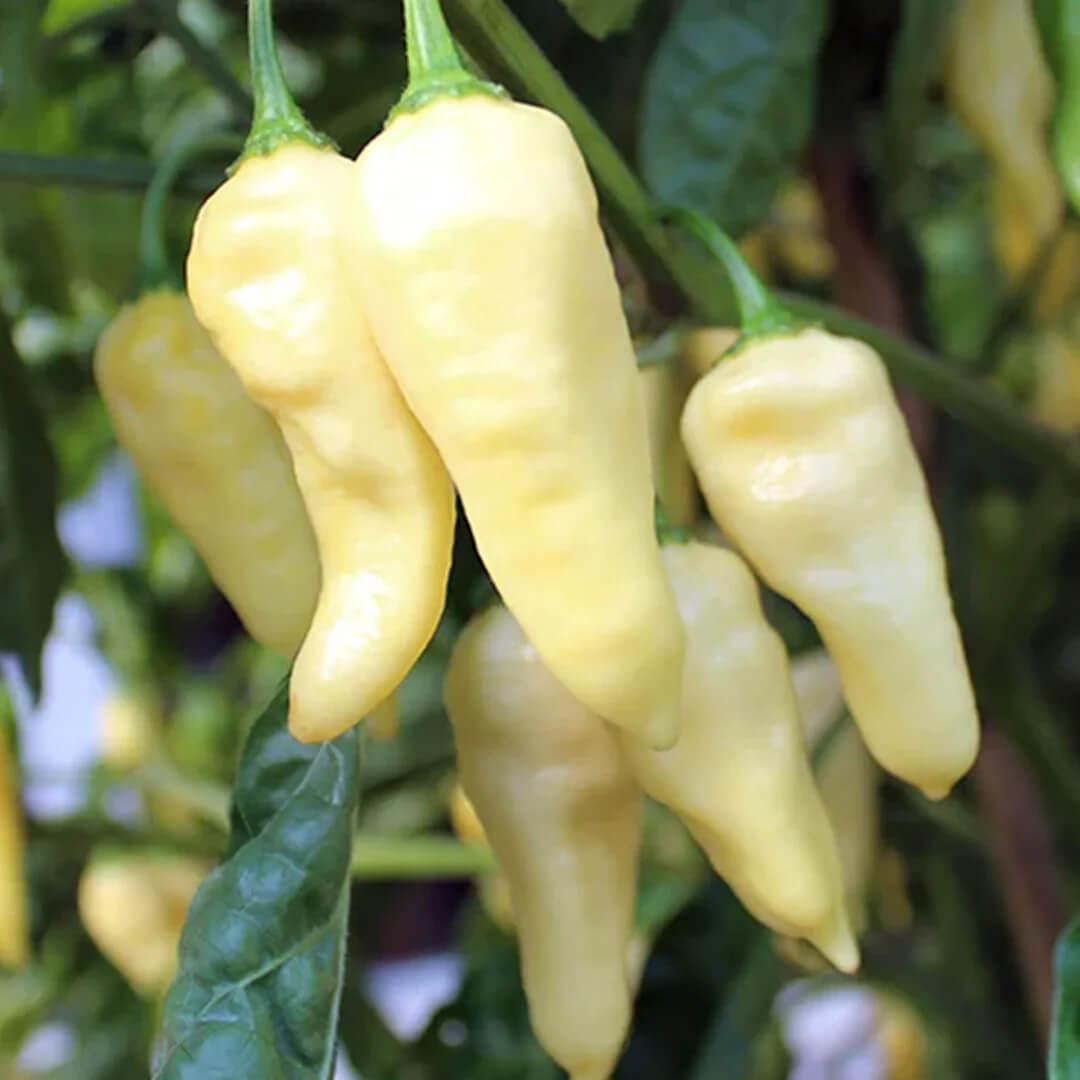
The Fatalii is one of the great citrus chillies, and this is its rarest and most striking form. The White Fatalii pairs searing, habanero-plus heat with an intense lemon-lime flavour, all wrapped in unusual ivory-white pods that make it a standout in the garden and a showstopper in the jar.
The Fatalii family hails from central and southern Africa, where it developed from American chillies brought over centuries ago, and evolved into a distinct habanero relative with a flavour all its own. That flavour is the whole point: bright, fruity and famously citrusy, with strong notes of lemon and lime that few other chillies can match. The white version tastes very like the classic yellow, perhaps a touch lighter and even more citrusy, with a similar, or marginally gentler, ferocious heat.
Visually it's a beauty. The elongated, tapering, semi-wrinkled pods ripen from pale green to a creamy ivory white, giving you a chilli that looks like nothing else and makes genuinely eye-catching pale hot sauces and powders. Being thin-walled, it dries beautifully too.
This one's for the citrus-hot-sauce maker and the collector. If you love the lemon-lime punch of a Fatalii but want something rarer and more beautiful, the white is a treat. The heat is serious, so it's a step up for beginners, but for anyone ready for habanero-plus territory, few chillies deliver flavour like this one.
Cultivation
Cultivation
As a chinense, the White Fatalii wants a long, warm season and a measure of patience, so getting the timing right matters, especially in NZ.
Start seeds indoors from late August to September. You can go as early as July with steady warmth, but there's no beating a cold windowsill, and chinense seeds sulk when they're cold. Give them the season they need.
If you like, soak seeds for 12 to 24 hours before sowing to soften the coat, then pat them dry. Sow two seeds per cell, about 5mm deep, in good seed-raising mix. Then give them consistent warmth around 20 to 30°C, ideally the warmer end. A heat pad earns its keep with chinense varieties. Pick one warm spot and leave the tray put, because steady beats spiky every time.
Patience helps here. Chinense seeds are slow, often two to four weeks or more to germinate, and the slow ones aren't dead, just unhurried. Keep the mix moist but never soggy and hold your nerve.
Once seedlings are up with a couple of true leaves, pot them on and keep them warm and bright. Don't rush them outdoors: wait until they're 100 to 150mm tall and all frost risk has passed, then harden them off over a week or so.
For their final home, go big. At least 20 litres, and 30 litres or more will reward you with a bigger plant and a heavier crop. Full sun, shelter from wind, and in cooler parts of the country a greenhouse or tunnel house makes the difference between a handful of pods and a proper harvest.
Growing
Growing
The White Fatalii makes a bushy, vigorous, productive plant, typically around 60 to 90cm, and a generous cropper of those pale, citrusy pods. A stake is worth having once it starts loading up.
Pinch out the main growing tip early to encourage branching. It always feels wrong cutting growth off a plant you've raised from seed, but the payoff is a bushier plant with more flowering sites and more pods.
Water consistently, keeping the soil moist but never waterlogged. Chinense varieties hate wet feet, and pots dry fast in a NZ summer, so check them daily once the heat sets in. Steady watering also heads off blossom end rot on the pods.
Feed with a tomato fertiliser once flowering starts. Chillies and tomatoes want much the same things, so there's no need to overcomplicate it.
Heat and sun are what this plant runs on. The warmer and sunnier its position, the better it grows and crops, which is why greenhouse growers get the most from chinense varieties in cooler regions. Up north, a sheltered sun trap outdoors does the job.
And like all chinense, it's a perennial at heart. Overwinter it somewhere frost-free, cut it back in autumn, and it'll come away again in spring with a head start on anything sown from seed. Fatalii plants are known for being prolific, so a mature overwintered one is a real asset.
Harvesting
Harvesting
Count on your first ripe pods around 100 to 120 days from transplant. Chinense varieties take their time forming and colouring up, so patience pays off at this end too.
The pods start pale green and ripen to a creamy ivory white, semi-wrinkled and tapering to a point. Pick them at the white stage for the fullest citrus flavour, when they feel firm and come away with a gentle tug. Use snips rather than pulling, since chinense branches are brittle and easily damaged.
Gloves on for this one. At habanero-plus heat, the oils on the pod skin are enough to make themselves felt, and whatever your hands touch for the next few hours will remember it. The heat is concentrated in the white membrane inside, so take particular care when cutting them open. Harvest and prep with gloves, wash up after, and keep your fingers away from your face.
The plant will keep flowering and setting fruit until the cold shuts it down, so expect a staggered harvest through late summer and autumn. Any pods still green at season's end will keep ripening off the plant, or can be used as they are.
For storage, this is a superb drying chilli. The thin walls mean the pods dry quickly in a dehydrator or warm, airy spot, giving you a striking pale powder and flakes that keep for months in an airtight jar away from light. Fresh pods keep a week or two in the fridge, and they freeze well whole for year-round use.
Heat Levels
Heat Levels
Make no mistake, this is a properly hot chilli, sitting at around 125,000 to 325,000 SHU. That puts it right alongside, and often a touch above, the habanero, and firmly into serious heat: roughly 25 to 65 times hotter than a jalapeño, depending on the pod. It's hot enough to command real respect, without quite reaching superhot territory.
What makes it special is the flavour riding on top. The Fatalii is one of the most citrus-forward chillies going, with a bright, unmistakable lemon-lime character over an earthy, peppery base. The white version leans even more citrusy than the classic yellow. This is heat with a genuinely distinctive flavour, which is exactly what makes it worth cooking with.
The burn has character too. Fatalii heat tends to come on fast and hit hard, striking the back of the throat first before spreading, a quicker onset than the slow-building habanero. As always, individual pods vary with the season, the sun and the plant, and a long hot summer produces fiercer pods than a cool damp one.
Handle it with respect. Gloves for prep, ventilation when cooking it down, and keep pods away from kids and pets. When tasting anything you've made, start with less than you think you need, because you can always add more.
Pests and Diseases
Pests and Diseases
The standard chinense watch-list, with a couple of notes for a plant that loves warm, sheltered spots.
Aphids head for the soft new growth first, usually in spring. Squash small numbers or blast them off with the hose, and encourage ladybirds and lacewings to handle the rest. Whitefly thrives in a warm greenhouse, which is just where this plant wants to be, so yellow sticky traps and good airflow keep numbers down.
Spider mites are the one to watch in a hot, dry tunnel house over summer. Look for fine speckling on the leaves and webbing underneath. They love dry air, so an occasional misting and decent ventilation go a long way.
At the seedling stage, damping off is the main threat: fresh seed-raising mix, no overwatering, and a bit of air movement prevent most of it. Slugs and snails will take out young transplants overnight, so protect them until they've hardened up.
On the disease front, most trouble is water-related. Overwatering invites root rot, and erratic watering brings on blossom end rot, those dark sunken patches on the pod tips. Consistent moisture and free-draining mix prevent both. In still, humid conditions botrytis can appear on crowded plants, one more reason to prune to an open shape and give plants room.
Nothing here should put you off. A well-fed, well-drained, well-ventilated plant shrugs off most problems, and chinense are tougher than their exotic reputation suggests.
Dishes
Dishes
The White Fatalii is a citrus bomb with serious heat and a stunning colour, and that combination makes it a joy in the kitchen.
Citrus hot sauce is its calling. That intense lemon-lime character is tailor-made for a bright, zesty sauce, and it pairs beautifully with actual lime and lemon, or with tropical fruit like pineapple and mango. The ivory pods make an unusual pale sauce that's as striking on the shelf as it is fierce on the tongue. A little carries a whole batch.
Powder is a close second. The thin walls dry fast to a pale, citrusy powder that adds real heat and a lemony lift by the pinch, superb sprinkled over fish, chicken or a fruit plate, or anywhere you want fiery citrus without the colour of a red chilli.
Fresh, it works wherever you'd use a habanero or Scotch Bonnet, especially with lighter meats like grilled chicken and fish where the citrus really shines, and in salsas, marinades and dressings that want a bright, hot edge. It also makes an excellent citrusy jelly or jam, the sweetness playing off the fire.
Because it runs genuinely hot, treat it as a season-to-taste chilli rather than one to use by the handful. But used with judgement, its blend of searing heat, vivid lemon-lime flavour and ivory colour makes it a standout, both on the plate and in the jar.
| Heat Level: | 125,000 – 325,000 SHUs |
| Type: |
Hot |
| Species: |
Capsicum chinense |
| Origin: | Central Africa |
| Days to Harvest: | 100-120 days |
| Seeds per Pack: | 10+ pepper seeds |
Share