


Ignition Seed Company
Carolina Reaper (Red) Seeds
Carolina Reaper (Red) Seeds
Couldn't load pickup availability
General
General
This is the big one. The Carolina Reaper is the most famous superhot on Earth, the pepper that held the Guinness World Record as the world's hottest chilli for a decade, and it remains the benchmark every heat seeker measures themselves against. If you want to grow the legend, the one that started the superhot craze for so many people, this is it. The ultimate trophy chilli.
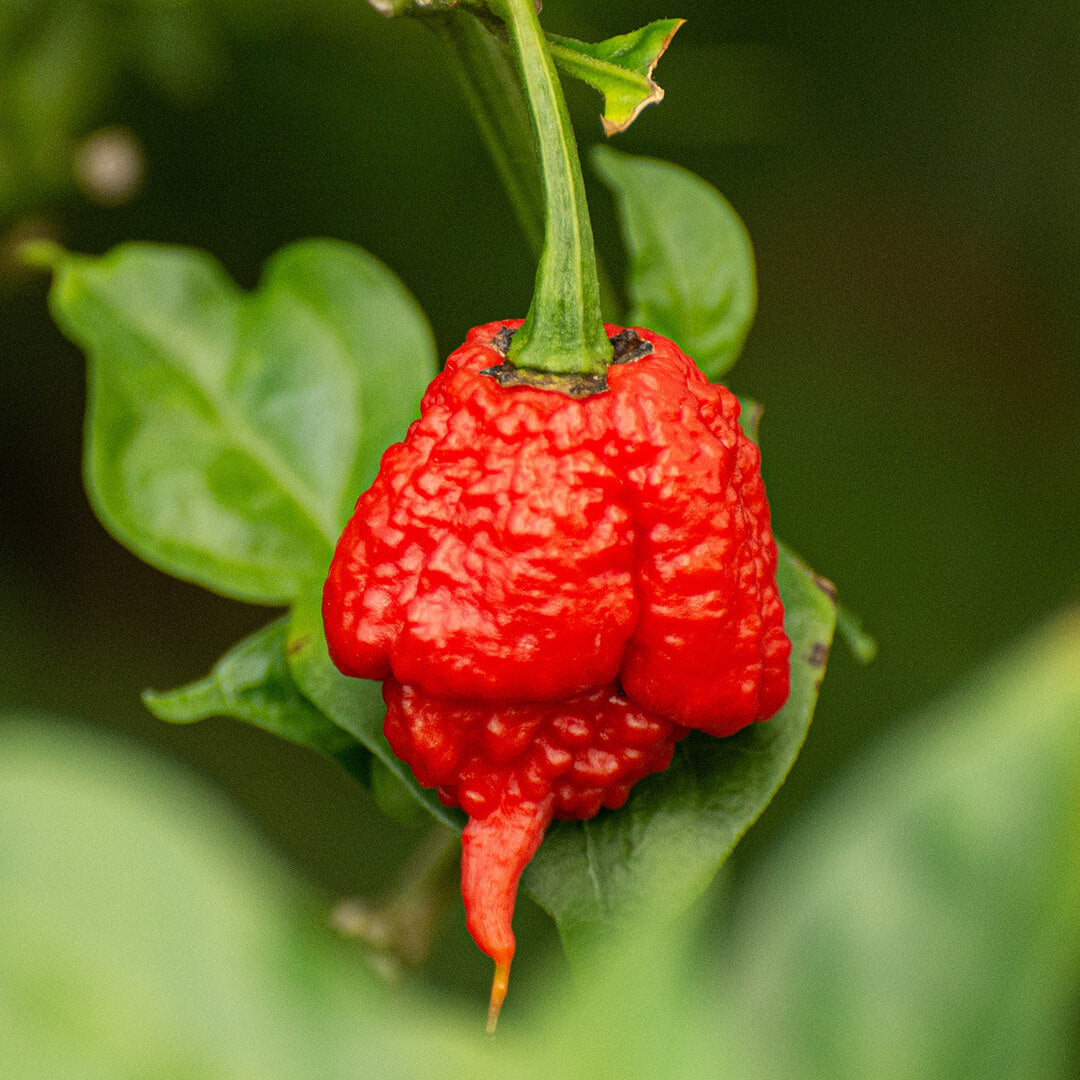
The Carolina Reaper is a Capsicum chinense, created by Ed Currie of the PuckerButt Pepper Company in South Carolina, reportedly by crossing a ghost pepper (Bhut Jolokia) with a particularly fierce red habanero. It held the official world record from 2013 to 2023. The pods are unmistakable: gnarled, wrinkled, brick-red, with a bumpy texture and that infamous pointed scorpion "stinger" tail, a genuine warning sign. A tall, productive plant carries them in serious numbers.
Underneath the brutal heat sits genuine flavour, which is what separates a great superhot from mere punishment: a surprising sweetness and a fruity, almost cinnamon-and-chocolate character underneath all that fire. It's this combination of record-breaking heat and real flavour that made the Reaper such a phenomenon, and such a favourite for extreme sauces.
This one's strictly for the deep end: experienced heat seekers, serious sauce makers, and anyone who wants to grow the world's most famous superhot. The heat is extreme and genuinely dangerous if treated carelessly, so it's emphatically not a beginner's chilli. If you're still climbing the Scoville ladder, start well below this and work up. Handle it with serious respect.
Cultivation
Cultivation
Superhots demand a long season and real patience, so timing matters more here than with almost anything else, especially in NZ.
Start seeds indoors from late August to September. You can push to July, but only with rock-steady warmth, because superhots are the least forgiving of all chillies when it comes to cold. There's no rushing them.
If you like, soak seeds for 12 to 24 hours before sowing to soften the coat, then pat them dry. Sow two seeds per cell, about 3 to 4 mm deep, in good seed-raising mix. Then give them what superhot seeds crave: consistent warmth around 20 to 30 degrees Celsius, aimed firmly at the warmer end. A heat pad is close to essential for this variety. Pick one warm spot and leave the tray there, because steady warmth beats heat spikes every time.
Then wait, and keep waiting. Reaper seeds are notoriously slow and erratic to germinate, often two to four weeks and sometimes longer, so the seeds that haven't shown after three weeks are not failures, just biding their time. Keep the mix moist but never soggy and hold your nerve.
Once seedlings are up with a couple of true leaves, pot them on and keep them warm and bright. Don't rush them outdoors: wait until they're 100 to 150mm tall and all frost risk has well and truly passed, then harden them off gradually over a week or so.
For their final home, go big. At least 20 litres, and 30 to 40 litres will be rewarded with a bigger plant and a heavier crop. Full sun, shelter from wind, and in cooler parts of the country a greenhouse or tunnel house is what takes this variety from struggling to genuinely productive. These plants want heat, and the more you can give them, the better they perform, and the hotter the pods.
Nothing come up yet? Read why chilli seeds can be slow to germinate.
Growing
Growing
Given a long enough season, the Red Carolina Reaper makes a sturdy, productive plant. It can reach over a metre in a pot and grow larger in the ground, carrying a good crop of gnarled, stinger-tailed pods. Stake it before the fruit load builds, because the branches need support once the plant is properly working.
You can pinch out the main growing tip early to encourage branching. It's a hard thing to do after waiting through slow germination, but it gives the plant more flowering sites and more pods. Keep the soil moist but never waterlogged. Chinense varieties dislike wet feet, while pots can dry quickly in a NZ summer. Check daily in warm weather and aim for steady watering rather than extremes.
Feed with a tomato fertiliser once flowering begins. Give the plant as much heat and sun as you can. A sheltered outdoor spot works well north of Taupō, while a greenhouse or tunnel house helps growers in cooler regions get the most from the variety. Planting in the ground produces the largest, most productive plants where the season allows.
Carolina Reaper is a perennial at heart. Overwinter it frost-free, cut it back hard in autumn, and it can return in spring with a real head start on a new plant grown from seed.
Harvesting
Harvesting
Count on 100 to 120 days from transplant to your first ripe pods, and often longer, so after the slow germination this is a real test of patience from start to finish. It's worth the wait.
The pods ripen from green to a deep brick-red, gnarled and wrinkled with that characteristic pointed scorpion stinger. Pick them fully red for the best of that sweet, fruity flavour and full, brutal heat, when they feel firm and come away with a gentle tug. Use snips rather than pulling, since the branches are brittle and the skin tears easily.
Gloves are absolutely not optional here. At this heat level, the oils on the pod skin are more than enough to cause real pain, and whatever your hands touch for hours afterwards will remember it. Many growers use eye protection too when processing a batch. Harvest with gloves, wash up thoroughly after, and keep your hands well away from your face. This is not the pepper to learn that lesson on.
The plant will keep flowering and setting fruit until the cold stops it, so expect a staggered harvest through late summer and autumn. Any pods left when the season ends are still ferociously hot and perfectly usable.
For storage you're spoiled for choice. Fresh pods keep a week or two in the fridge. They freeze brilliantly whole and can be grated straight from frozen. And they dry well for flakes and powder that will season a year of cooking from a single plant, a little going an extremely long way. The fruity flesh also ferments beautifully for hot sauce.
Heat Levels
Heat Levels
Let's not dress it up: the Carolina Reaper sits at the very top tier of the Scoville scale, and it was officially the hottest chilli in the world for a decade. It averages a colossal 1,641,183 SHU, with individual pods tested at over 2,200,000 SHU, so call it 1,400,000 to 2,200,000 depending on the pod and the season. This is genuinely extreme, world-class heat, roughly 280 to 440 times hotter than a jalapeno, and to be treated with real caution.
The burn is the stuff of legend, and countless internet videos. It starts with a deceptively sweet, fruity bite before turning to a savage, building heat that many describe as molten, climbing and climbing and lingering for a very long time. That slow, ferocious quality is exactly why the Reaper became so infamous, and why the first few seconds are never the whole story.
Underneath the fire is genuine flavour: a surprising sweetness and a fruity, cinnamon-and-chocolate character, which is what makes it worth cooking with rather than merely surviving. As always, individual pods vary with the season, the sun and the plant, and a long hot summer produces angrier pods.
Make no mistake about the fire, though. Gloves for handling, ventilation when cooking, keep it well away from children and pets, and when tasting anything you've made, start with an amount that feels absurdly small. With a chilli this hot, you can always add more, and you almost never need to. This is not a chilli for dares; treat it as the serious ingredient it is.
Pests and Diseases
Pests and Diseases
The standard chinense watch-list, with the usual superhot notes.
Aphids will find the soft new growth first, usually in spring. Squash small numbers or blast them off with the hose, and let ladybirds and lacewings handle the rest. Whitefly loves a warm greenhouse, which is exactly where your Reaper wants to live, so yellow sticky traps and good airflow keep the numbers down.
Spider mites are the one to watch in a hot, dry tunnel house over summer. Look for fine speckling on the leaves and webbing on the undersides. They thrive in dry air, so an occasional misting and decent ventilation help a lot.
At the seedling stage, damping off is the main threat, which stings after weeks waiting for superhot seeds to germinate: use fresh seed-raising mix, don't overwater, and give trays some air movement. Slugs and snails will take out young transplants overnight, so protect new plantings until they've toughened up.
On the disease front, most trouble is water-related. Overwatering invites root rot, and irregular watering brings on blossom end rot, those dark sunken patches on the pod tips. Consistent moisture and free-draining mix prevent most of it. In humid, still conditions botrytis can appear on crowded plants, one more reason to prune to an open shape and give plants room.
None of this should scare you off. A well-fed, well-drained, well-ventilated plant shrugs off most problems, and after nursing one through its glacial germination you'll find the grown plant tougher than it looks.
Dishes
Dishes
This is a seasoning, not a vegetable, and with the world's most famous superhot that rule is close to law. Get it settled and the Reaper becomes a potent tool in your kitchen, provided you respect it.
Extreme hot sauce is the natural destination, and the Reaper makes a superb one. That sweet, fruity, cinnamon-chocolate character makes a genuinely good sauce, and a fermented one built on tropical fruit like mango or pineapple delivers heat with real depth rather than just pain. A tiny amount carries an entire batch, so one plant keeps a sauce maker supplied for a very long time.
Powder and flakes are the other obvious route. The pods dry to a powder of ferocious potency, the kind you measure in grains rather than pinches. Season with it like it's radioactive and you'll be about right.
In the pot, think fractions of fractions. A sliver, seeds and pith removed, will make its presence felt through a large batch of chilli or curry, bringing that sweet, fruity flavour along with the fire. Removing the membrane and seeds tames a good deal of the heat while keeping the flavour, which is the sensible way to cook with it.
A frozen pod grated in tiny amounts is the safest dosing method of all. And chilli oils or infused products should be made gently and labelled very clearly, because unlabelled Reaper anything is a genuine hazard in a shared kitchen. If someone suggests eating one whole for a challenge, that's firmly between them and their consequences, and it's genuinely not a good idea.
Recipes
Recipes
Recipes from our kitchen using Carolina Reaper (Red):
| Heat Level: | 1,400,000 – 2,200,000 SHUs |
| Type: | Super Hot |
| Species: | Capsicum chinense |
| Origin: |
USA |
| Days to Harvest: | 100-120 days |
| Seeds per Pack: | 10+ pepper seeds |
Share


I bought 2 packs of the reapers and was really impressed with how they were packaged, came with a little guide to grow them. I'm hoping to have some growing in the spring