


Ignition Seed Company
Black Pearl Seeds
Black Pearl Seeds
Couldn't load pickup availability
General
General
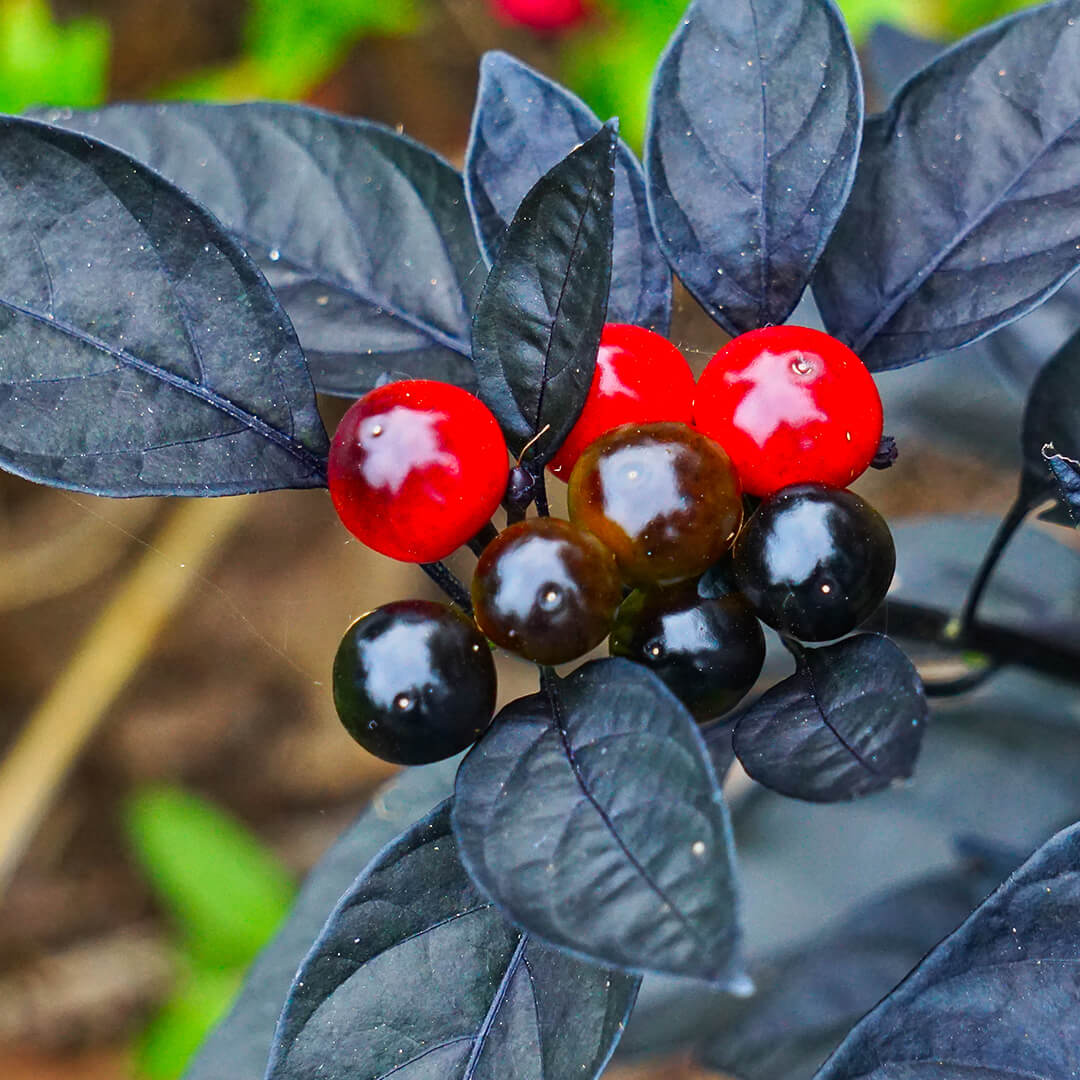
If you want a plant that stops people in their tracks, the Black Pearl is a showstopper. It's a striking ornamental chilli with dramatic jet-black foliage and clusters of glossy, round, black fruit that look uncannily like dark pearls, ripening to a deep red. As dramatic as edible plants get, and it carries a genuine medium-hot kick behind the beauty.
The Black Pearl is a Capsicum annuum, an award-winning ornamental variety (a former All-America Selections winner) bred for its extraordinary looks. The whole plant is a picture: deep purple-black leaves, and small round pods that emerge a shiny, jet-black and mature to a glossy red, borne in eye-catching clusters. It's compact and bushy, ideal for pots, borders and containers, where that dark foliage and pearl-like fruit make a real statement.
Now, it's grown mainly as an ornamental, but the fruit is edible and genuinely hot, sitting at a real medium-hot level. The flavour is fairly standard as ornamentals go, the looks are the main event, but those little black pearls do carry a proper kick, so they're usable as well as beautiful.
This one's for the grower who wants drama in the garden, and it's a brilliant choice for ornamental plantings, patio pots and anyone who likes their edibles good-looking. The heat is a genuine medium, so the pods are usable in the kitchen, but the real reason to grow it is those extraordinary black pearls against the dark foliage. A true showpiece.
Cultivation
Cultivation
As an annuum, the Black Pearl is straightforward and rewarding to grow, and quicker off the mark than the superhots, which makes it a great choice for beginners and ornamental growers alike.
Sow seeds indoors from late August to September. You can start in July with steady warmth, but there's less urgency than with the slow chinense types, so spring sowing suits it well.
If you like, soak seeds for 12 to 24 hours before sowing to soften the coat, then pat them dry. Sow two seeds per cell, about 3 to 4 mm deep, in good seed-raising mix. Keep them consistently warm at 20 to 30 degrees Celsius. Annuum seeds are generally obliging and usually germinate within a week or two.
Keep the mix moist but never soggy. Once seedlings are up with a couple of true leaves, pot them on and keep them warm and bright. Good strong light helps bring out the darkest, richest foliage colour.
When they reach 100 to 150mm tall and the weather has warmed properly, move them to their final home, in the ground or a pot of 10 to 15 litres or so. Its compact, bushy habit makes it a superb container and border plant. Full sun is key for the best dark colour, with a bit of shelter.
The plant is compact and well-behaved, so it rarely needs staking, though a short support helps if it's carrying a heavy fruit load.
Growing
Growing
The Black Pearl makes a compact, bushy, ornamental plant with striking dark purple-black foliage and clusters of glossy black-to-red fruit. It's a genuine feature plant, and its neat habit makes it as at home in an ornamental border or patio pot as in the veggie patch.
Pinch out the main growing tip early to encourage branching. More branches means a fuller, bushier plant and more of those pearl-like fruit clusters to show off.
Water consistently, keeping the soil moist but never waterlogged. Pots dry fast in a NZ summer, so check them regularly, and steady watering keeps the plant looking its best.
Feed with a tomato fertiliser once flowering starts, but go easy: modest feeding actually gives the best glossy foliage and compact habit, whereas too much nitrogen can green up the leaves and loosen the shape. Chillies and tomatoes want much the same things, so keep it simple.
Full sun is the key to the best colour: the more light, the darker and richer the black foliage and the more dramatic the contrast with the ripening red fruit. Cool nights can intensify the pigment too. It flowers and fruits prolifically through summer and into autumn, staying covered in those eye-catching clusters.
Like many chillies, it can be overwintered as a perennial. Bring it somewhere frost-free, cut it back in autumn, and it'll return in spring with a head start on anything grown from seed.
Harvesting
Harvesting
Expect your first fruit around 75 to 90 days from transplant, which is quick as chillies go, though with an ornamental like this you may be in no hurry to pick, since the fruit is half the display.
The pods emerge a glossy jet-black and ripen through to a deep, shiny red, and a plant carrying both colours at once, against the dark foliage, is the whole point of growing it. You can pick them at either stage, though the plant looks best left to carry its clusters. If you're growing it partly for seed, let the fruit ripen fully red, then dry it before extracting the seeds.
Snip them off with scissors rather than tugging, since it's easy to disturb the neat clusters. And if you're using the fruit, a genuine medium heat means gloves are worth it once you're handling a few.
At 10,000 to 30,000 SHU there's a real medium-hot kick here, enough to sting and to make eye-rubbing a mistake, so glove up if you're prepping a batch and wash your hands well afterwards. Don't be fooled by the ornamental label into treating them as mild.
For storage, if you're using the fruit, the little pods dry well for flakes and can be ground into a medium-hot powder. But most growers keep this one for the display and simply save a few seeds from ripe red fruit to grow again next year.
Heat Levels
Heat Levels
Here's the thing people underestimate about ornamental chillies: many are genuinely hot, and the Black Pearl is no exception, sitting at around 10,000 to 30,000 SHU. That's a real medium heat, roughly 2 to 6 times hotter than a jalapeno, comparable to a serrano or a milder cayenne. Those pretty black pearls carry a proper kick, so treat them with respect if you're eating them.
The flavour is fairly ordinary as chillies go, which is typical of ornamentals bred for looks rather than taste, so the heat is more the point than any complex flavour. But it's a usable, genuine medium heat, so the fruit isn't just for show if you fancy putting it to work.
As with any chilli, individual fruit vary, and heat shifts with the season, the sun and how the plant was grown. A long hot summer generally produces fiercer pods. Much of the heat sits in the seeds and membrane, so removing them tames it if you want to use the fruit more gently.
For most growers, though, the heat is a bonus rather than the reason to grow it. The Black Pearl earns its place on looks, those extraordinary black pearls against the dark foliage, with a genuine medium kick as a handy extra.
Pests and Diseases
Pests and Diseases
An easygoing, robust ornamental with the usual short watch-list.
Aphids will go for the soft new growth in spring. A blast from the hose or a squash between the fingers handles small numbers, and ladybirds and lacewings do the rest if you let them. Whitefly can build up in a warm greenhouse, so yellow sticky traps and decent airflow keep them honest.
Spider mites are worth watching in hot, dry conditions, showing as fine speckling on the leaves. An occasional misting and good airflow keep them down. At the seedling stage, damping off is the main risk: use fresh seed-raising mix, avoid overwatering, and give trays a bit of air movement. Slugs and snails will happily mow down young transplants overnight, so protect new plantings until they've toughened up.
On the disease front, most trouble is water-related. Overwatering invites root rot, and erratic watering can bring on blossom end rot, those dark sunken patches on the fruit. Consistent moisture and free-draining mix prevent most of it.
Nothing here is dramatic. The Black Pearl is a tough, robust ornamental, and a well-watered, well-drained plant in a sunny spot will crop and colour up beautifully with very little fuss.
Dishes
Dishes
The Black Pearl is grown first and foremost for its looks, but the fruit carries a genuine medium heat, so it's usable in the kitchen if you fancy it.
As an ornamental, its main "use" is the display: those glossy black pearls ripening to red against dark foliage make a striking feature in pots, borders and container arrangements, and the plant is often paired with silver or chartreuse foliage to make the dark leaves and fruit pop. It's a showpiece plant above all.
If you do want to cook with the fruit, treat it as a medium-hot chilli. The little pods can be chopped fresh into salsas or sauces for a genuine kick, though the flavour is fairly plain, so it's more about heat than complexity. They dry well for flakes or a medium-hot powder, which is a practical way to use a glut.
Their small size and neat shape make them a fun, fiery garnish, too, a scattering of glossy black-red pods adding drama to a plate. Just warn anyone tempted to pop a whole "pearl" in their mouth that it carries a real medium kick.
The through-line is looks first, heat second. Grow the Black Pearl for the drama it brings to the garden, and treat the genuine medium heat of the fruit as a usable bonus rather than the main event.
| Heat Level: | 10,000 – 30,000 SHUs |
| Type: |
Medium |
| Species: |
Capsicum annuum |
| Origin: | USA |
| Days to Harvest: | 75-90 days |
| Seeds per Pack: | 10+ pepper seeds |
Share


Black Pearl Seeds
Seeds turned up promptly. Germination has been very good and plants growing strongly.
Awesome prompt service. Cant wait for these to grow both as a regular plant but also as a bonchi plant
Fantastic packaging. The envelope matches all the seed packets. The seeds germinated as expected for the heat mat method used. Seedling is strong and healthy.