

Ignition Seed Company
Anaheim Pepper Seeds
Anaheim Pepper Seeds
Couldn't load pickup availability
General
General
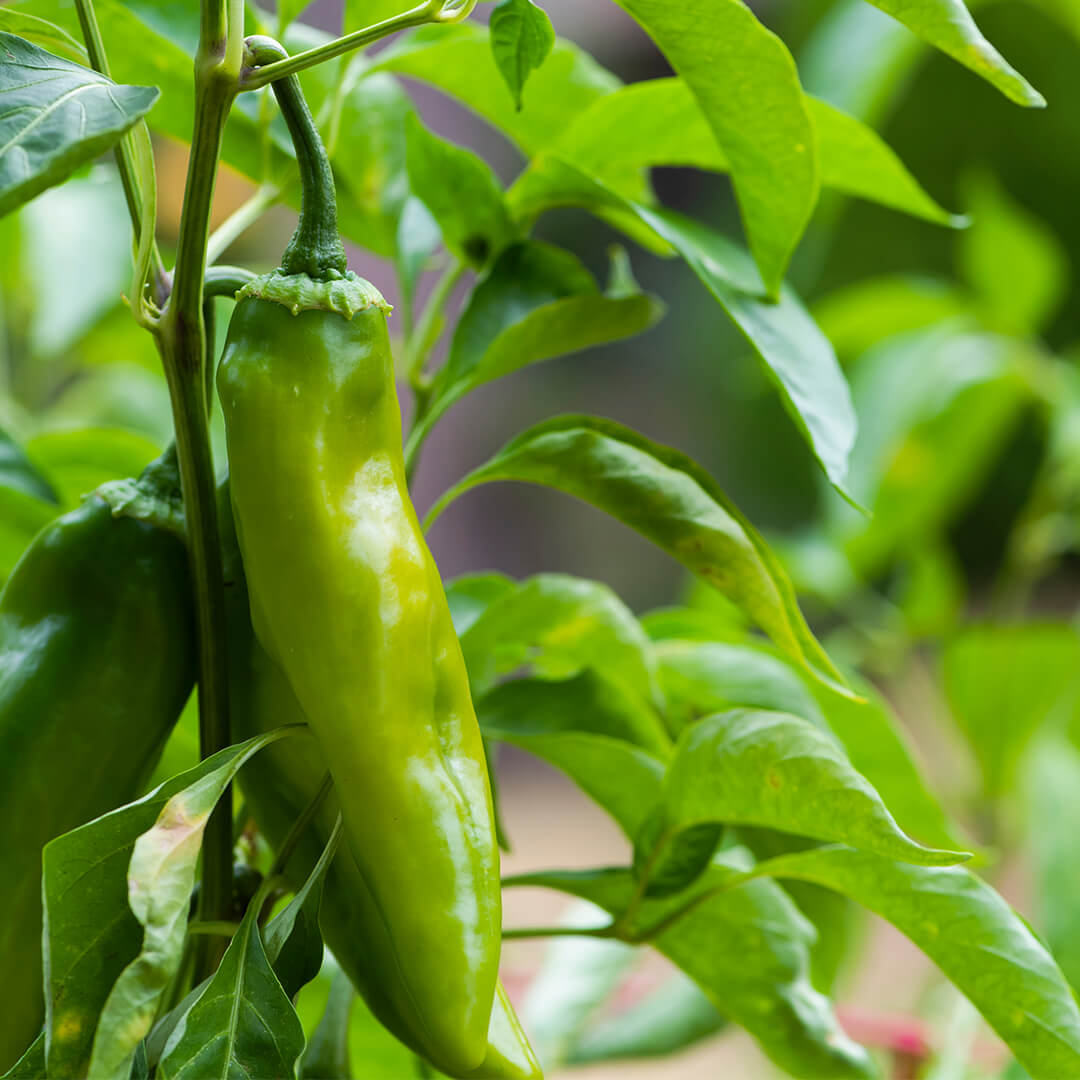
If you want a chilli you can actually cook with by the handful rather than the sliver, the Anaheim is a brilliant place to start. It's a big, mild, easy-going pepper, long and tapering, beloved across the American southwest for stuffing, roasting and mild salsas. For a beginner it's about as forgiving as chillies get, and for any cook it's genuinely useful.
The Anaheim traces back to New Mexico and took its name from Anaheim, California, where a farmer named Emilio Ortega popularised it in the early 1900s (yes, that Ortega). It's known by a small pile of aliases, New Mexico chile, California chile, and chile colorado once it ripens red, but whatever you call it, it's a mild, dependable annuum.
The flavour is its selling point: mild and slightly sweet, with a gentle smoky note that really blooms when the pods are roasted. The generous size, up to 15cm or more, makes it a natural for stuffing, and the pods can be picked green for a fresh, grassy taste or left to ripen red for something sweeter and fruitier. One fair warning: heat varies with growing conditions, and New Mexico-style strains can climb towards jalapeño level, so the odd pod may surprise you.
This one's for the home grower who wants a reliable, productive, family-friendly chilli. It's perfect for chiles rellenos, mild green salsas, roasting on the barbecue, and anyone testing the waters of chilli growing. No heat tolerance required, just a warm spot and a bit of sun.
Cultivation
Cultivation
As a mild annuum, the Anaheim is one of the easier chillies to grow, and quicker off the mark than the superhots, which makes it a great choice for beginners.
Sow seeds indoors from late August to September. You can start in July with steady warmth, but there's less urgency than with the slow chinense types, so spring sowing suits it well.
If you like, soak seeds for 12 to 24 hours before sowing to soften the coat, then pat them dry. Sow two seeds per cell, about 3 to 4 mm deep, in good seed-raising mix. Keep them consistently warm at 20 to 30°C. Annuum seeds are generally obliging and usually germinate within a week or two.
Keep the mix moist but never soggy. Once seedlings are up with a couple of true leaves, pot them on and keep them warm and bright.
When they reach 100 to 150mm tall and the weather has warmed properly, move them to their final home, in the ground or a pot of 20 litres or so. Full sun and a bit of shelter, and they'll get on with it. These are relatively compact plants, so they suit a range of spaces.
The plant grows to around a metre and crops well, and those large pods carry some weight, so a stake keeps it upright once it's loaded.
Growing
Growing
The Anaheim makes a productive, fairly compact plant of around a metre, and it yields generously, giving you plenty of those big pods through summer.
Pinch out the main growing tip early to encourage branching. More branches means more flowering sites, which on a productive pepper like this means a heavier crop.
Water consistently, keeping the soil evenly moist. Erratic watering brings on blossom end rot, those dark sunken patches on the pod tips, which larger-fruited peppers like the Anaheim are a touch prone to, so steady is the goal, especially for potted plants that dry out fast in a NZ summer.
Go easy on the feeding. As with most fruiting peppers, too much nitrogen gives you a lush leafy plant and fewer fruits. A tomato fertiliser at flowering is plenty.
Keep picking to keep the plant productive. You can harvest green for a milder, grassier pepper or leave them to ripen red for something sweeter, and picking regularly encourages the plant to keep setting fruit.
Like many chillies, it can be overwintered as a perennial. Bring it somewhere frost-free, cut it back in autumn, and it'll return in spring with a head start.
Harvesting
Harvesting
Expect your first pods around 75 to 90 days from transplant to the green stage, which is quick as chillies go, with a few more weeks needed if you want them fully red.
You can pick at two stages. Green, they're firm, mild and grassy, ideal for roasting, stuffing and green salsas, which is how most people use them. Left on the plant, they ripen to a deep red, turning sweeter and fruitier, at which point they're known as chile colorado and are lovely for red sauces or drying.
Snip them off with scissors rather than tugging, since the branches can be brittle on a loaded plant. And pick regularly to keep the plant flowering and fruiting.
No gloves needed here, in the main. At 500 to 2,500 SHU there's little on these pods to trouble your hands, though as with any chilli it pays to wash up after prep, especially if you've hit one of the hotter pods.
For storage, roasting is the classic route: char the skins, steam and peel, and the roasted flesh freezes beautifully for use through the year. Fresh pods keep a week or so in the fridge, and ripe red ones dry well (as chile seco del norte) for grinding into a mild, sweet chilli powder.
Heat Levels
Heat Levels
Let's set expectations: this is a mild chilli, sitting at around 500 to 2,500 SHU. That puts it just above the bell pepper and below the jalapeño, firmly in gentle territory, the kind of warmth most people can enjoy without any trouble.
There's a catch worth knowing, though. Anaheim heat varies more than most with where and how it's grown. California-style strains sit at the mild end, while New Mexico-style strains, stressed by drier conditions, can climb to jalapeño level or occasionally beyond. So while the average pod is mild, the odd one may bring a genuine kick, particularly late in a hot, dry summer.
What you get alongside the gentle heat is flavour: mildly sweet, slightly smoky, and fruitier as the pods ripen to red. Roasting deepens that sweetness beautifully, which is why roasted Anaheim is such a staple of southwest cooking.
For most cooks, the modest and mostly-mild heat is exactly the appeal. It lets the flavour lead, works for the whole household, and makes the Anaheim one of the most usable chillies you can grow. If you want more consistent bite, a jalapeño steps things up.
Pests and Diseases
Pests and Diseases
An easygoing, productive plant with the usual short watch-list.
Aphids will go for the soft new growth in spring. A blast from the hose or a squash between the fingers handles small numbers, and ladybirds and lacewings do the rest if you let them. Whitefly can build up in a warm greenhouse, so yellow sticky traps and decent airflow keep them honest.
At the seedling stage, damping off is the main risk. Use fresh seed-raising mix, avoid overwatering, and give trays a bit of air movement. Slugs and snails will happily mow down young transplants overnight, so protect new plantings until they've toughened up.
Being a larger-fruited pepper, the Anaheim can be a little prone to blossom end rot if watering is erratic, showing as dark sunken patches on the pod ends. It's a calcium-uptake hiccup brought on by inconsistent moisture, not a disease, and steady watering prevents it. Root rot from waterlogged soil is the other classic, seen off by free-draining mix and sensible watering.
Nothing here is dramatic. A well-watered, well-drained plant in a sunny spot will crop happily and generously all season.
Dishes
Dishes
The Anaheim is a cook's mild chilli, and its size, gentle heat and sweet, smoky flavour make it wonderfully versatile.
Stuffing is its signature. That large, roomy pod is tailor-made for chiles rellenos: roast and peel the peppers, stuff them with cheese, batter and fry. It's a milder, more approachable take on the dish than you'd get with a hotter pepper, and a genuine crowd-pleaser.
Roasting is where the flavour really sings. Char the skins on a barbecue or under a grill, peel, and you've got sweet, smoky strips for tacos, burgers, sandwiches, eggs, or blending into sauces. Roasted Anaheim is a southwest staple for good reason.
It makes excellent mild salsas and sauces, standing in for jalapeño when you want the flavour without much heat, ideal when you're cooking for a mixed table. Diced into soups, stews and chilis, it adds gentle warmth and a smoky depth. And ripened red and dried, it grinds into a mild, sweet chilli powder that's a lovely all-purpose seasoning.
The through-line is versatility without fire. Because it's mild, the Anaheim plays well with almost anything and won't scare off the spice-shy, which makes it one of the most useful chillies a home cook can grow.
Recipes
Recipes
| Heat Level: | 500 – 2,500 SHUs |
| Type: | Mild |
| Species: |
Capsicum annuum |
| Origin: | USA |
| Days to Harvest: | 75-90 days |
| Seeds per Pack: | 10+ pepper seeds |
Share