

Ignition Seed Company
Aji Amarillo Seeds
Aji Amarillo Seeds
Couldn't load pickup availability
General
General
If Peru had a national chilli, this would be it. The Aji Amarillo is the very soul of Peruvian cooking, a fruity, tangy, vivid-orange pepper so central to the cuisine that Peruvian chefs consider it indispensable. Grow one and you've got the authentic heart of a whole culinary tradition in your garden.
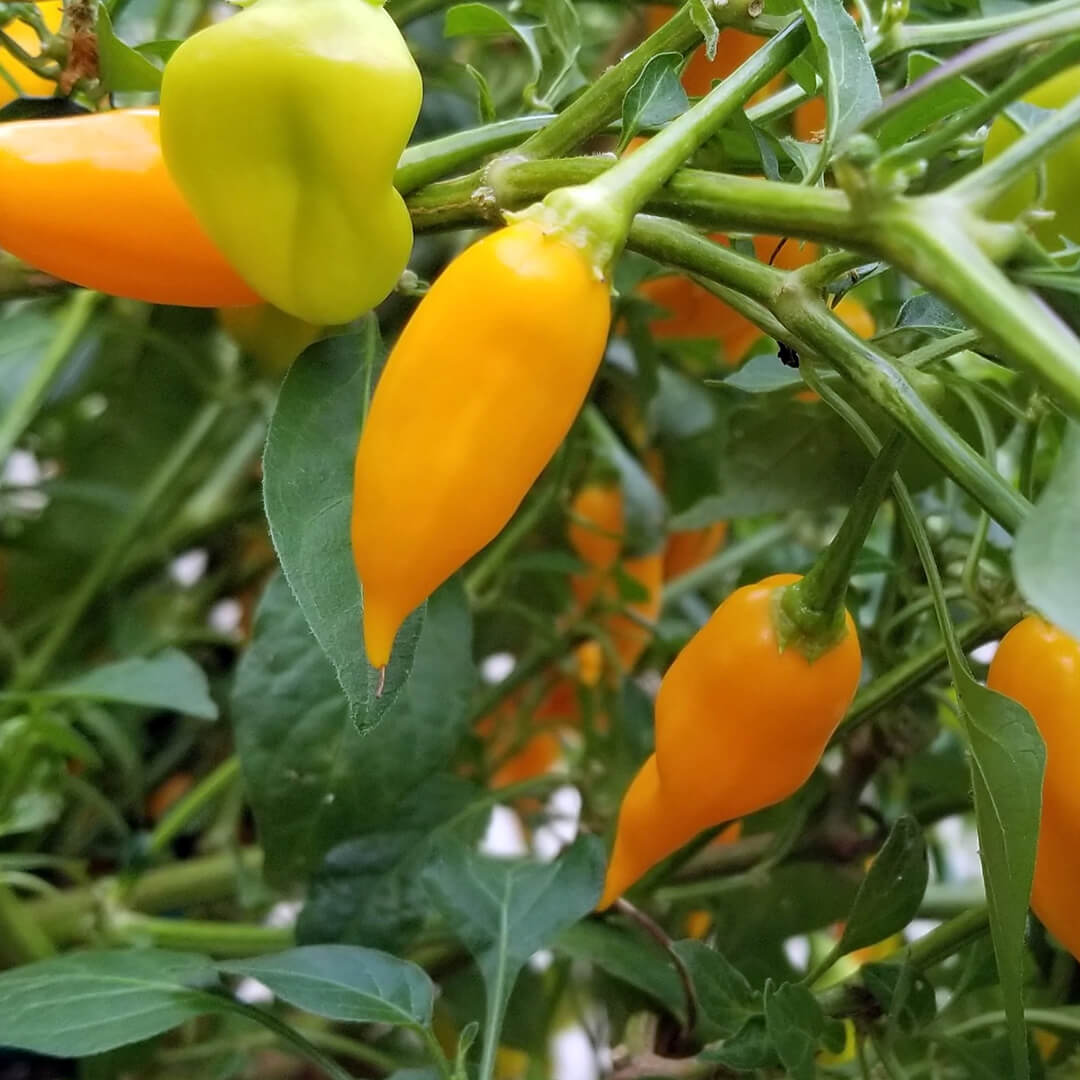
The name means "yellow chilli", though the pods actually ripen to a brilliant, glowing orange, and it's a classic Capsicum baccatum, the South American species prized for bright, fruity flavour. The pods grow long and tapering, some 10 to 15cm, dangling from a tall, productive plant that's been cultivated in the Andes since ancient times. This is a pepper with deep roots and a deserved reputation.
The flavour is the whole reason it's so beloved: distinctly fruity and berry-like, with a raisiny depth and a bright, tangy edge, quite unlike any other chilli. It carries a genuine, warming heat, more than a jalapeño, but that heat always plays second fiddle to the flavour, which is exactly why it's used so generously in Peruvian dishes rather than sparingly.
This one's for the cook who wants real flavour with a proper, usable kick. It's essential for authentic Peruvian food, ceviche, ají de gallina, huancaína sauce, and brilliant in sauces, stews and marinades besides. It's also a handsome, generous plant to grow. If you love fruity chillies with genuine character, the Amarillo is a must.
Cultivation
Cultivation
Baccatums like the Aji Amarillo are rewarding and productive, but they like a long season, so give this one a head start in NZ, especially as it can be slow to ripen its long pods.
Sow seeds indoors from late August to September, or a week or two earlier if you can offer steady warmth, since the extra runway helps this variety ripen fully before autumn cools.
If you like, soak seeds for 12 to 24 hours before sowing to soften the coat, then pat them dry. Sow two seeds per cell, about 3 to 4 mm deep, in good seed-raising mix. Keep them consistently warm at 20 to 30°C. Baccatum seeds are generally reliable and usually germinate within a week or two, though a heat pad helps keep them even.
Keep the mix moist but never soggy. Once seedlings are up with a couple of true leaves, pot them on and keep them warm and bright.
When they reach 100 to 150mm tall and the weather has warmed properly, move them to their final home, in the ground or a pot of 20 litres or more. Full sun and shelter suit them well.
Plan for size from the start. The Aji Amarillo grows tall, potentially well over a metre, and crops heavily, so it definitely needs a sturdy stake or cage. Get it in early rather than trying to prop up a loaded plant later.
Growing
Growing
The Aji Amarillo makes a tall, vigorous, highly productive plant that can get genuinely large, so a strong stake or cage is essential once it starts loading up with those long, dangling pods.
Pinch out the main growing tip early to encourage branching. On a plant this productive, more branches means more of those fruity orange pods and a sturdier shape to carry them.
Water consistently, keeping the soil moist but never waterlogged. Pots dry fast in a NZ summer, so check them regularly, and steady watering also heads off blossom end rot on those long pods.
Feed with a tomato fertiliser once flowering starts. Chillies and tomatoes want much the same things, so keep it simple.
This is a generous cropper, ripening its long pods in succession for an extended harvest. Keep picking to keep it productive, and one healthy plant will keep a keen Peruvian cook well supplied through the season.
Being a baccatum, it's a perennial worth overwintering. Bring it somewhere frost-free, cut it back in autumn, and it'll return in spring with a head start, which is well worth it given how long baccatums take from seed and how slow this one can be to ripen.
Harvesting
Harvesting
Expect your first ripe pods around 100 to 120 days from transplant, and sometimes longer, as the Amarillo can be slow to colour up its long pods. Patience pays off, and the long, steady harvest that follows makes up for the wait.
The pods start green and ripen to a brilliant, glowing orange, at which point they're at their fruity, tangy best. Pick them fully coloured, when they come away with a gentle tug. Snip rather than pull, since the branches can be brittle on a tall, loaded plant.
Given the heat, gloves are a sensible idea once you start cutting into them in quantity. At 30,000 to 50,000 SHU there's enough capsaicin to leave a sting and to make eye-rubbing a mistake, so glove up for prep and wash your hands well afterwards.
Keep picking regularly to keep the plant flowering and setting new fruit right through the season.
For storage, the Aji Amarillo is versatile. It's superb fresh, and the classic Peruvian approach is to blend it into a paste (ají amarillo paste) that keeps in the fridge or freezer, ready to form the base of countless dishes. Fresh pods keep a week or so in the fridge, they freeze brilliantly whole, and they dry well too into a fruity powder. A batch of home-made amarillo paste in the freezer is a genuine kitchen asset.
Heat Levels
Heat Levels
Make no mistake, this is a properly hot chilli, sitting at around 30,000 to 50,000 SHU. That's a solid, genuine heat, roughly 6 to 10 times hotter than a jalapeño, putting it in similar territory to a cayenne, hot enough to take seriously, without tipping into the extreme.
But with the Aji Amarillo, the heat is never the headline. What defines it is the flavour: fruity, berry-like, raisiny and tangy, so distinctive that Peruvian cooks use it generously for taste, with the warming heat as a welcome bonus rather than the point. It's this balance of real spice and standout flavour that makes it so useful and so beloved.
As always, individual pods vary with the season, the sun and the plant, and a long hot summer generally produces fiercer pods. The heat concentrates in the seeds and membrane, so removing them tames things while keeping all that lovely fruity flavour, which is exactly how it's often prepared.
Handle it with sensible respect: gloves for prepping a batch, and keep it away from eyes, kids and pets. Used generously for flavour, as the Peruvians do, it brings a fruity warmth and genuine character that few other chillies can match.
Pests and Diseases
Pests and Diseases
An easygoing, productive plant, and baccatums are often noted for their hardiness, but the usual watch-list applies.
Aphids will go for the soft new growth in spring. A blast from the hose or a squash between the fingers handles small numbers, and ladybirds and lacewings do the rest if you let them. Whitefly can build up in a warm greenhouse, so yellow sticky traps and decent airflow keep them honest.
At the seedling stage, damping off is the main risk. Use fresh seed-raising mix, avoid overwatering, and give trays a bit of air movement. Slugs and snails will happily mow down young transplants overnight, so protect new plantings until they've toughened up.
On the disease front, most trouble is water-related. Overwatering invites root rot, and erratic watering can bring on blossom end rot, those dark sunken patches on the pod tips, which the long-podded Amarillo is a little prone to. Consistent moisture and free-draining mix prevent most of it, and baccatums are generally tough customers.
Nothing here is dramatic. A well-watered, well-drained, well-staked plant in a sunny spot will crop heavily and reliably all season.
Dishes
Dishes
The Aji Amarillo is the beating heart of Peruvian cooking, and its fruity, tangy heat is genuinely irreplaceable in the cuisine.
The Peruvian classics are its calling. It's essential in ají de gallina (a creamy chicken stew), in the huancaína sauce that dresses papa a la huancaína, and in countless ceviches and causas. The standard technique is to blend the pods into a smooth, vivid-orange paste, which then forms the flavour base of dish after dish, so a batch of paste is the key to authentic Peruvian cooking at home.
Beyond Peru, it's a wonderfully versatile chilli. That fruity, berry-like flavour lifts marinades, sauces and stews, pairs beautifully with chicken and seafood, and brings a bright, warming character to anything it's added to. It makes a superb hot sauce, on its own or blended with fruit.
Dried, it becomes ají amarillo seco or mirasol (confusingly, a different pepper from the Mexican Mirasol), and ground into powder it's a fragrant, fruity seasoning for rubs, soups and stews.
The through-line is fruity flavour with genuine, usable heat. Because the flavour leads, the Amarillo is used generously rather than sparingly, and it rewards that generosity with a depth and brightness that define an entire cuisine. Learn to cook with it and you unlock the taste of Peru.
Recipes
Recipes
| Heat Level: | 30,000 – 50,000 SHUs |
| Type: |
Hot |
| Species: | Capsicum baccatum |
| Origin: | Peru |
| Days to Harvest: | 100-120 days |
| Seeds per Pack: | 10+ pepper seeds |
Share