

Ignition Seed Company
Aji Ahuachapan Seeds
Aji Ahuachapan Seeds
Couldn't load pickup availability
General
General
If you've worked your way through the usual chillies and want something with genuine character, the Aji Ahuachapan is a quiet gem. It's a rare baccatum from El Salvador, named after the Ahuachapán region, and it belongs to the great family of South and Central American ajís prized for flavour first and heat second. This one delivers on both counts.
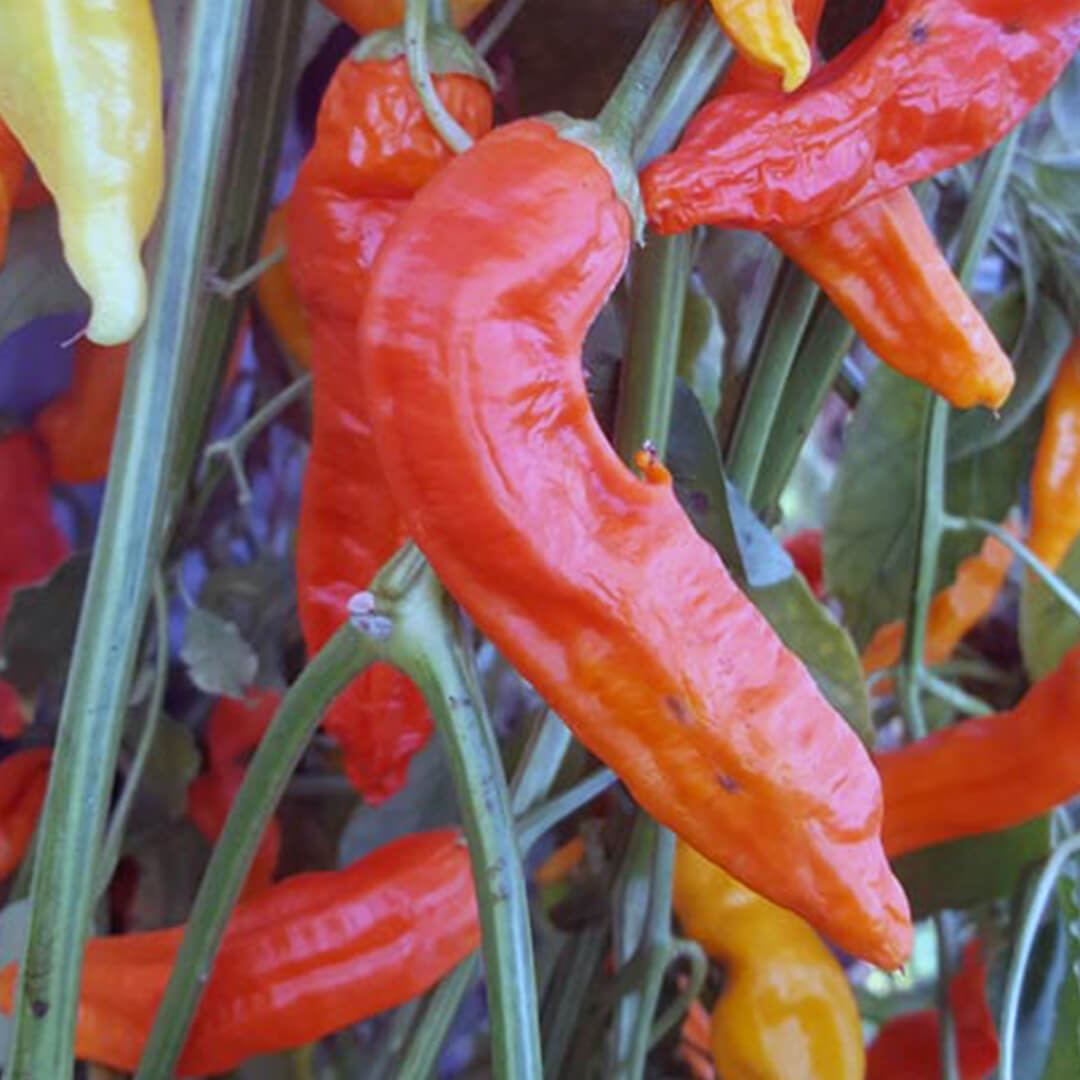
The flavour is the draw. Sweet, fruity, and often likened to berries, it's the kind of bright, complex taste that reminds you why baccatums have such a devoted following. The heat is mild to medium, enough to notice but never enough to overwhelm, so the fruit stays front and centre. The long, slender pods, some 10 to 12cm, ripen from green to a vivid orange and dangle prettily from a tall plant.
It's a looker in the garden, too. Like most baccatums it grows tall and a touch gangly, so it'll want staking once it's laden with fruit, but the reward is a plant that produces generously and keeps going all season.
This one's for the grower who values flavour and enjoys something a little off the beaten track. It's mild enough for anyone to enjoy, productive enough to keep you well supplied, and versatile enough to earn its place in the kitchen. If you've only ever grown annuums, a baccatum like this is a genuine eye-opener.
Cultivation
Cultivation
Baccatums like the Aji Ahuachapan are rewarding to grow, but they do like a long season, so give them a head start in NZ.
Sow seeds indoors from late August to September, or even a week or two earlier if you can offer steady warmth, since baccatums can be slow to ripen their fruit and appreciate the extra time.
If you like, soak seeds for 12 to 24 hours before sowing to soften the coat, then pat them dry. Sow two seeds per cell, about 3 to 4 mm deep, in good seed-raising mix. Keep them consistently warm at 20 to 30°C. Baccatum seeds are generally reliable and usually germinate within a week or two, though a heat pad helps keep them even.
Keep the mix moist but never soggy. Once seedlings are up with a couple of true leaves, pot them on and keep them warm and bright.
When they reach 100 to 150mm tall and the weather has warmed properly, move them to their final home, in the ground or a pot of 20 litres or more. Full sun and shelter suit them well.
One thing to plan for from the start: this is a tall, gangly grower. Get a stake or a sturdy support in early, because a mature Ahuachapan heavy with pods will topple without one.
Growing
Growing
The Aji Ahuachapan makes a tall, prolific plant, often exceeding a metre, with a slightly sprawling habit that genuinely needs support. Stake it or cage it early and save yourself the trouble of propping up a loaded plant later.
Pinch out the main growing tip early to encourage branching. On a plant this productive, more branches means more of those sweet, fruity pods, and a bushier shape that carries the crop better.
Water consistently, keeping the soil moist but never waterlogged. Pots dry out fast in a NZ summer, so check them regularly, and steady watering also heads off blossom end rot on the pods.
Feed with a tomato fertiliser once flowering starts. Chillies and tomatoes want much the same things, so keep it simple.
Baccatums are generous croppers when they're happy, and the Ahuachapan is no exception, producing a high yield of pods that ripen in succession for a long harvest. Keep picking to keep it productive.
And like many chillies, it's a perennial that can be overwintered. Bring it somewhere frost-free, cut it back in autumn, and it'll return in spring with a head start, which is well worth it given how long baccatums take to get going from seed.
Harvesting
Harvesting
Expect your first ripe pods around 100 to 120 days from transplant. Baccatums take their time, so patience is part of the deal, but the long, steady harvest that follows makes up for it.
The pods start light green and ripen to a warm, vivid orange, at which point they're at their sweetest and fruitiest. Pick them fully coloured, when they come away with a gentle tug. Snip rather than pull, since the branches can be brittle on a tall plant.
No gloves needed here. At 2,500 to 5,000 SHU there's nothing on these pods that'll trouble your hands, so harvesting and prep are relaxed affairs.
Keep picking regularly to keep the plant flowering and setting new fruit. Left unpicked, a plant slows down; kept harvested, it'll produce right through to the cold.
For storage, this variety dries beautifully. The thinnish walls mean the pods dry down well in a dehydrator or a warm, airy spot, giving you a fruity dried chilli and a superb powder that keeps for months in an airtight jar away from light. Fresh pods hold a week or so in the fridge, and they freeze fine too if you'd rather. A jar of home-dried Ahuachapan powder is a real pleasure to cook with.
Heat Levels
Heat Levels
Let's set expectations: this is a mild to medium chilli, sitting at around 2,500 to 5,000 SHU. That's roughly jalapeño territory, enough warmth to know it's there, but a long way from anything fierce. Estimates vary a little by grower and season, as they do with all chillies, but this is a gentle, approachable pepper by design.
What that mildness buys you is flavour. With the heat kept in check, the sweet, berry-like fruitiness of the Ahuachapan comes through clearly, which is exactly the point of growing a baccatum. It's a chilli you can eat for taste rather than endure for bragging rights.
As always, growing conditions nudge the number. A long hot summer can push it towards the upper end of that modest range, but even at its warmest this is a family-friendly pepper. If you want its fruity character with more of a kick, there are hotter baccatums to explore, but the Ahuachapan's charm is precisely its balance.
For most growers, that gentle heat is a feature. It makes the pepper endlessly usable, in fresh dishes, sauces and dried powders alike, without ever dominating the plate.
Pests and Diseases
Pests and Diseases
An easygoing plant, and baccatums are often noted for their hardiness, but the usual watch-list applies.
Aphids will go for the soft new growth in spring. A blast from the hose or a squash between the fingers handles small numbers, and ladybirds and lacewings do the rest if you let them. Whitefly can build up in a warm greenhouse, so yellow sticky traps and decent airflow keep them honest.
At the seedling stage, damping off is the main risk. Use fresh seed-raising mix, avoid overwatering, and give trays a bit of air movement. Slugs and snails will happily mow down young transplants overnight, so protect new plantings until they've toughened up.
On the disease front, most trouble is water-related. Overwatering invites root rot, and erratic watering can bring on blossom end rot, those dark sunken patches on the pod tips. Consistent moisture and free-draining mix prevent most of it. Baccatums are also known to shrug off some diseases better than other species, so a healthy, well-tended plant rarely gives much trouble.
Nothing here is dramatic. A well-watered, well-drained plant in a sunny spot, with a decent stake to keep it upright, will crop happily all season.
Dishes
Dishes
The Aji Ahuachapan is a flavour chilli, and its sweet, fruity, berry-like character opens up plenty of kitchen.
In its home cuisine it's a Salvadoran staple, lending its distinctive taste to local dishes, and it's particularly good in fruity, spicy sauces to go with fish, chicken or vegetables. The mild heat means it flavours without overpowering, which is exactly what you want in a sauce meant to complement rather than dominate.
Dried and ground, it comes into its own. The pods dry well and make a fragrant, fruity powder that's a superb all-purpose seasoning, bright and warming without being aggressive. It's the kind of thing you'll find yourself reaching for on all sorts of dishes once you have a jar of it.
Fresh, the pods are lovely chopped into salsas, salads and marinades, where the berry-like sweetness really sings. And because they're mild, they're a great way to add fruity chilli flavour to family meals without scaring anyone off.
It also takes well to pickling and makes a fine chilli jam, where the natural fruitiness pairs beautifully with a little sweetness. However you use it, the through-line is that bright, sweet, fruity character, the signature of a good baccatum, and the reason this one's worth a spot in the garden.
| Heat Level: | 2,500 – 5,000 SHUs |
| Type: | Medium |
| Species: |
Capsicum baccatum |
| Origin: | El Salvador |
| Days to Harvest: | 100-120 days |
| Seeds per Pack: | 10+ pepper seeds |
Share